How Is Biltong Made the Traditional Way?
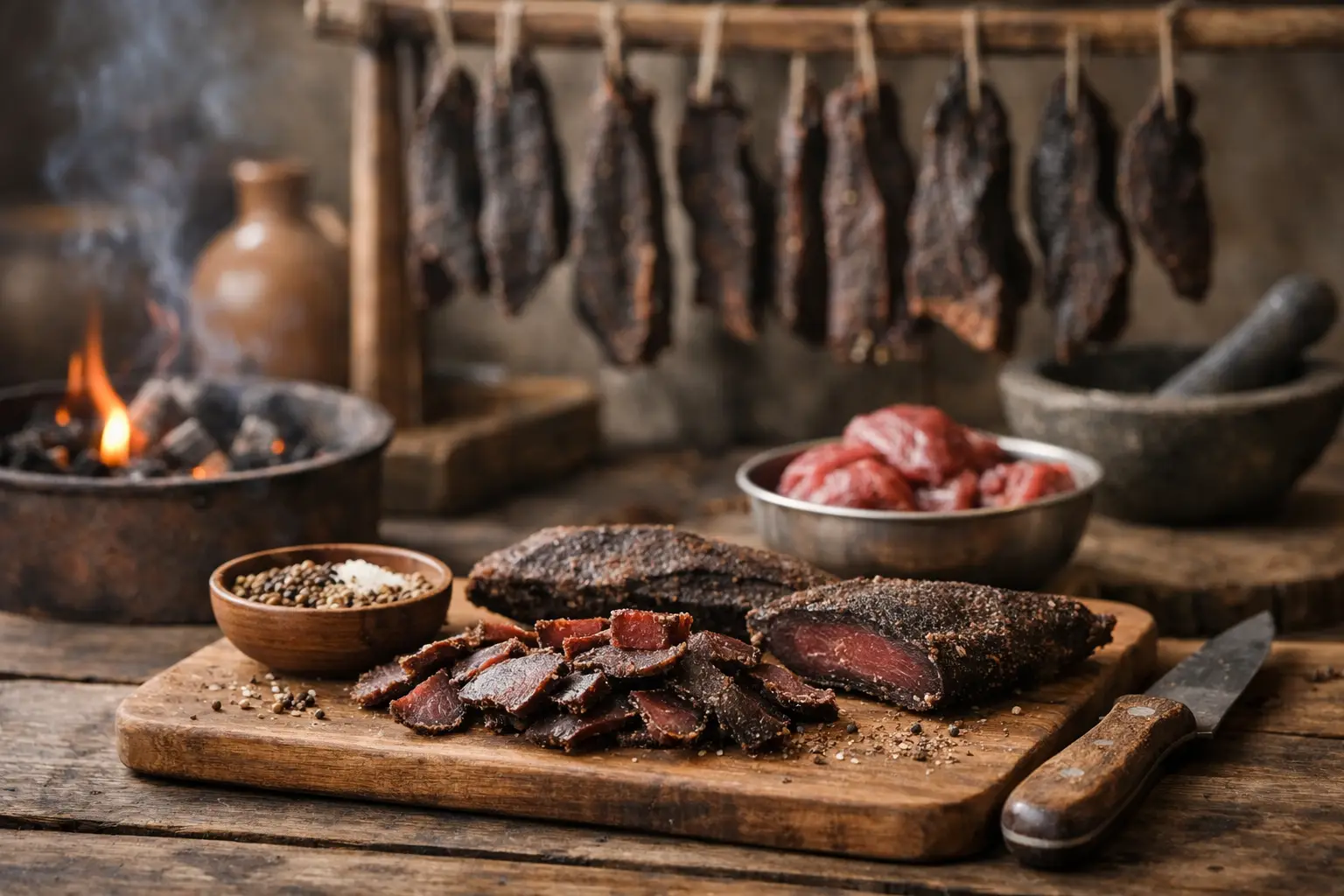
Ask any South African what makes proper biltong special and you will not get a one-word answer. If you are wondering how is biltong made, the short version is simple - quality meat is cut, seasoned, cured and slowly air dried. The real answer sits in the detail, because that is where the flavour, texture and proper old-school character come from.
Biltong is not just dried meat. Done properly, it is a handcrafted product shaped by tradition, airflow, timing and restraint. That is also why great biltong tastes so different from standard jerky. It is richer, more tender and far less about sugar or heavy smoke. It is about meat, spice and patience.
How is biltong made from start to finish?
Traditional biltong starts with solid beef cuts. Silverside, topside and other lean sections are popular because they dry well while still holding enough natural fat for flavour. Some producers leave a little fat on for a fuller, more authentic bite. Others trim more closely for a leaner finish. Neither approach is wrong - it depends on the style you are chasing.
The meat is sliced into long strips, usually with the grain. Thickness matters here. A thinner strip dries faster and gives a firmer chew. A thicker strip can stay darker and softer in the centre. This is one of the first big trade-offs in biltong making. There is no single perfect size, only the result you want in the final product.
Once cut, the meat is seasoned. This is where traditional South African flavour starts to show itself. Salt is essential, cracked coriander is the signature note, and black pepper brings depth. Vinegar is another key part of the process. It adds a slight tang, helps with curing and gives biltong its unmistakable profile. Some recipes include Worcestershire sauce, chilli or other spices, but classic biltong keeps the core flavour clean and balanced.
After seasoning, the meat is left to cure for a period of time. This allows the salt, vinegar and spices to work through the strips. The cure develops flavour while drawing out moisture. Timing matters. Too short, and the inside can taste flat. Too long, and the salt or vinegar can dominate. Skilled biltong making is often about knowing when to stop, not just what to add.
From there, the meat is hung to dry in a controlled environment with steady airflow. That drying stage is what transforms cured beef into biltong. It is not cooked. It is not smoked in the way many jerky products are. It is air dried slowly until it reaches the desired texture.
The ingredients that give biltong its character
Traditional biltong uses a short ingredient list, and that is part of the appeal. When the meat is good, you do not need to hide it behind sugar, sticky marinades or overpowering flavours. The basics do the heavy lifting.
Beef is the foundation, of course, but coriander is what many people notice first. Toasted and cracked coriander seed gives biltong that warm, nutty, unmistakably South African aroma. Salt drives both flavour and preservation. Vinegar sharpens everything up and helps create the signature savoury tang. Pepper rounds it out.
That simplicity is also why quality matters so much. If the spice blend is basic, the meat has nowhere to hide. If the drying is uneven, you will taste it. If the cut is poor, the texture will tell on itself very quickly. Premium biltong relies on doing the simple things properly.
Why biltong is air dried instead of cooked
This is one of the biggest reasons people ask how is biltong made, especially if they are used to jerky. Biltong is traditionally air dried because that method preserves the natural taste and texture of the meat. It allows moisture to leave gradually, which creates a firmer outside and, depending on the cut and drying time, a tender centre.
Cooking would change the whole product. You would lose the distinct texture that makes biltong feel more substantial and less processed. Slow air drying also helps the spice and vinegar notes settle into the meat rather than sitting on top of it.
That said, air drying is not a casual process. The environment has to be managed carefully. Too much humidity can interfere with drying. Too little airflow can create inconsistency. Too much drying can leave the meat hard and less enjoyable. Good biltong is traditional, yes, but it is also precise.
What affects the final texture?
Texture is where biltong becomes personal. Some people want it soft and slightly moist in the middle. Others want a drier, chewier style they can really sink their teeth into. Both are valid, and both come down to how the meat is cut, cured and dried.
Thickness is a major factor. So is fat content. A lean strip will dry differently from one with a nice ribbon of fat running through it. Drying time also changes everything. Pull the meat earlier and you keep more tenderness. Leave it longer and the bite firms up.
This is why one person’s perfect biltong can be another person’s too dry or too wet. Taste plays a part, but tradition does too. South Africans often have strong opinions because biltong is not just a snack - it is memory, culture and comfort.
How biltong differs from jerky
Biltong and jerky are both dried meat snacks, but they are not interchangeable. The process is different, the seasoning is different and the eating experience is different.
Jerky is usually sliced thinner, marinated in a wetter mixture and cooked or heat dried. It often leans sweeter and smokier. Biltong is typically cured with vinegar and dry spices, then air dried over time. That gives it a deeper, meatier flavour and a more natural texture.
This is why people who try proper biltong often notice it feels less like a heavily flavoured snack and more like premium dried meat. It has presence. It has bite. It tastes handcrafted rather than engineered.
Is traditional biltong always made the same way?
Not quite. The core method stays familiar, but small differences matter. Families have their own recipes. Producers tweak spice levels, drying times and cut selection. Some prefer a stronger vinegar profile. Others want coriander to take the lead. Some like thick, fatty slices. Others prefer lean, ready-to-slice pieces with a firmer finish.
Climate also changes things. Making authentic South African-style biltong in Australia means respecting tradition while working carefully with local conditions. That balance matters. You want the same proper flavour and texture, but the process still needs to suit the environment and maintain consistent quality.
That is where experience comes in. Traditional does not mean rough or random. The best biltong makers know how to preserve heritage while controlling every stage with care.
Why ingredient quality matters so much
Because biltong is such a stripped-back product, poor ingredients show up fast. If the beef lacks quality, you will notice it in the chew and flavour. If the seasoning is blunt, the whole batch can taste one-dimensional. If the curing is rushed, the centre can lack depth.
Premium biltong depends on starting with proper meat and treating it with respect. That means careful trimming, balanced seasoning and enough drying time to let the product become what it should be. It is not about loading in more ingredients. It is about getting the essentials right.
For Australian customers who want authentic South African flavour, that matters even more. You are not just buying a protein snack. You are buying something with heritage behind it. Something familiar for expats and genuinely exciting for anyone discovering biltong for the first time.
So, how is biltong made well?
It is made with good beef, a confident hand with seasoning and the patience to let air drying do its job. It is made by understanding that small changes in cut, cure and drying time can completely shift the result. Most of all, it is made well when the process respects the tradition instead of trying to shortcut it.
That is why handcrafted biltong still stands apart. At Steyn's Biltong & Jerky, that old-school approach is part of the lekkerness. When biltong is made properly, you can taste the difference straight away - not just in the spice, but in the bite, the balance and the simple confidence of a product that does not need to pretend to be anything else.
If you have only ever had supermarket-style dried meat, proper biltong is worth trying with fresh expectations. The beauty of it is not in being flashy. It is in how much character comes from doing a few things exceptionally well.