How to Choose Premium Jerky With Real Bite
The jerky aisle can make every packet look premium. Dark meat, a bold label and a smoky flavour name are easy to dress up. Knowing how to choose premium jerky means looking past the front-of-pack promises and judging what actually matters: the meat, the ingredient list, the texture, the flavour and the care behind it.
A great piece of jerky should feel like a proper meat snack, not a chewy sugar strip in fancy packaging. It should have character from the first bite and leave you reaching for another piece because the flavour is clean, balanced and satisfying. That is the standard worth shopping for.
Start with the meat, not the marketing
Premium jerky begins with recognisable cuts of meat. The pieces should look like meat fibres, with natural variation in shape, thickness and grain. Perfectly identical strips can be convenient, but they do not always signal the same careful approach as sliced whole-muscle meat.
Look closely at the product description and pack. Clear language around the meat used is a good sign. So is a brand that is upfront about where it produces its jerky and puts craftsmanship ahead of vague claims. You are buying a meat snack, so the meat should be the main event rather than an afterthought hidden behind a long flavour story.
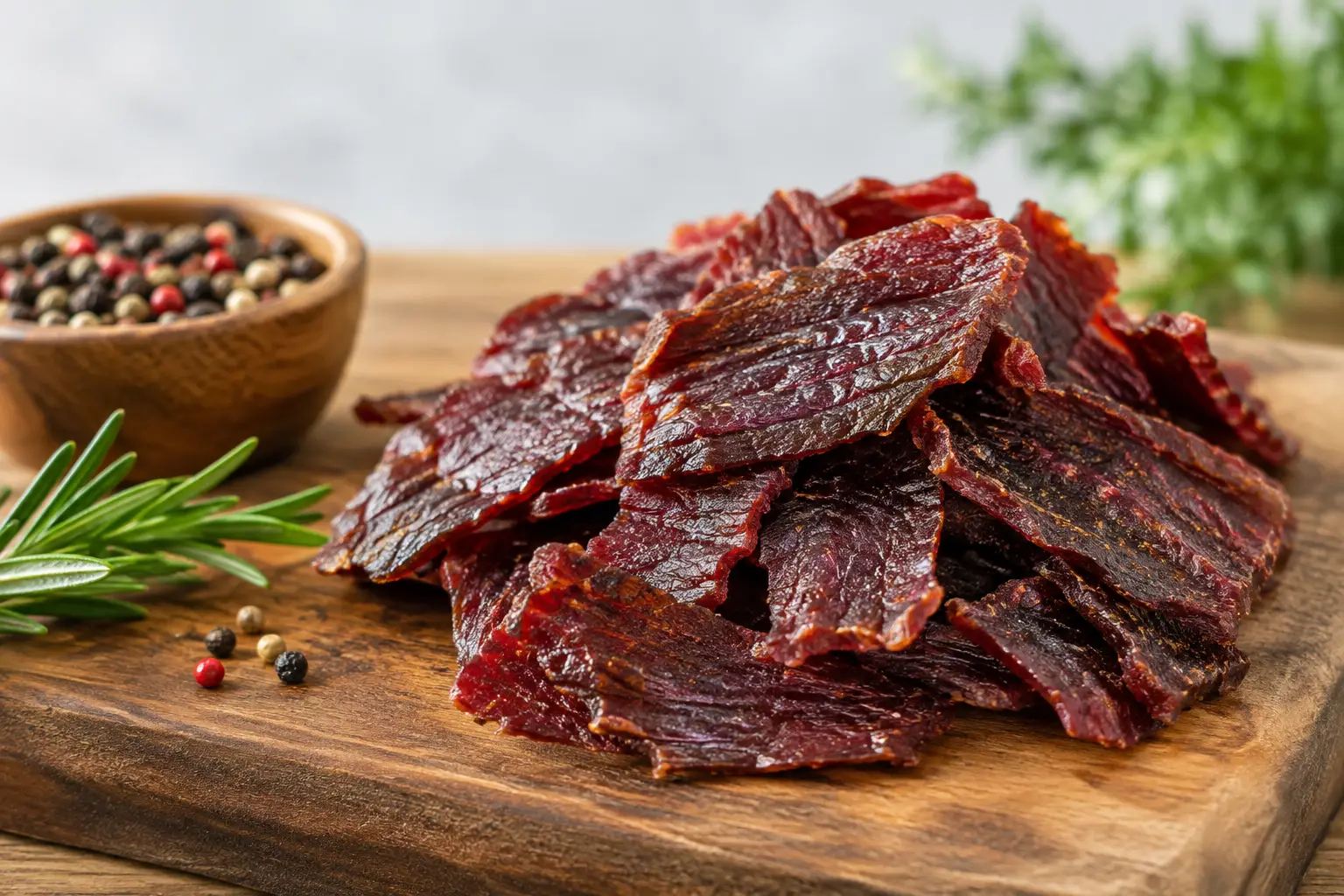
Colour can offer a useful clue, though it is not a final verdict on its own. Good jerky usually ranges from deep reddish brown to rich mahogany, depending on the seasoning and drying style. Be wary of pieces that look unusually glossy, heavily lacquered or artificially uniform. A little natural variation is part of the appeal.
Read the ingredients with a flavour-first mindset
An ingredient list tells you a lot about the kind of eating experience waiting in the packet. Premium does not have to mean bare-bones, and a bold chilli, pepper or smoky profile can use several ingredients well. The question is whether they support the beef or bury it.
A shorter, familiar list often points you in the right direction. Meat, salt, spices, vinegar and a measured touch of sweetness have clear roles in building flavour. When the list is dominated by syrups, fillers or flavouring designed to imitate a barbecue sauce, the result can taste more like confectionery than jerky.
Sweetness is the biggest trade-off to consider. Some people genuinely enjoy a sticky, sweet-style jerky, particularly for road trips or sharing around the campfire. Others want pepper, savoury depth and a cleaner finish. Neither preference is wrong, but a premium product should be deliberate. The sweetness should round out the seasoning, not take over every bite.
Spice should build, not batter
Heat is another area where quality shows. A strong chilli jerky can still be beautifully balanced if the spice arrives with warmth, pepperiness and flavour. If the heat hits hard but leaves no sense of the meat or seasoning, it may be more of a stunt than a well-crafted snack.
The same goes for smoke. A gentle smoky note can be brilliant alongside cracked pepper or garlic. Too much, however, can make every piece taste flat and acrid. Look for flavour names that sound specific and appetising, then expect the product to deliver more than one loud note.
Judge texture by the style you enjoy
There is no single perfect jerky texture. That is good news, because choosing premium jerky is as much about finding your preferred style as it is about avoiding poor quality.
Some jerky is lean and firm with a proper chew. It asks you to take your time, and the flavour develops as you eat it. Other styles are softer, more tender and easier to bite through. A premium tender jerky should still have a clear meat texture. It should not feel wet, rubbery or oddly pasty.
Thickness matters too. Thin slices often deliver a quicker crunch-to-chew experience and take seasoning well. Thicker strips can feel more substantial and showcase the grain of the meat, though they need careful drying to avoid a tough outer layer with an unpleasant centre.
If you are trying a new brand, consider ordering more than one flavour or texture where available rather than committing to a large bag of one style. Your ideal everyday jerky may be peppery and firm, while your favourite share-pack choice may be a softer, smoky option. Lekkerness is personal.
Freshness is a premium feature
Jerky is shelf-stable by nature, but that does not mean freshness is irrelevant. A product that has spent too long sitting around can lose aroma, develop a dull texture or feel dry in the wrong way. Premium jerky should smell inviting when the pack opens - savoury, spiced and unmistakably meaty rather than stale or overly sweet.
Check for clear date information and storage directions. Brands that care about the product experience make it easy for customers to understand how to keep it at its best once opened. If you are ordering online, choose a specialist that treats dispatch and delivery as part of the product, not an afterthought. Fast express delivery matters when you want your dried meats arriving in top form, particularly in the Australian heat.
Packaging has a role here as well. It should protect the jerky without making the purchase feel anonymous. A good pack gives you the essentials clearly: the flavour, size, ingredients and storage details. Premium can look polished, but it should also be practical enough for the glovebox, desk drawer, hiking bag or weekend ute trip.
Look for a producer with a point of view
The best jerky rarely comes from a brand trying to be everything to everyone. It comes from people with a clear opinion about flavour, texture and tradition. That might mean a classic pepper-forward style, a smoky house seasoning or a South African-inspired approach that sits confidently alongside biltong, droëwors and cabanossi.
Heritage alone is not a shortcut to quality, but it can be a strong signal when it is paired with care and consistency. A producer that knows its craft tends to talk specifically about its products rather than relying on generic words such as “gourmet” or “artisan” without substance.
At Steyn's Biltong & Jerky, that point of view comes from handcrafted dried meats made on the Sunshine Coast with unmistakable South African character. For shoppers who miss the flavours of home - or simply want a more distinctive snack - that kind of focus makes a real difference.
Price tells part of the story
Premium jerky generally costs more than a heavily processed snack, and there is a straightforward reason: quality meat, careful preparation and smaller-batch attention are not the cheapest route. But the most expensive packet is not automatically the best one.
Compare value by considering the cut, the pack size, the ingredient quality and whether the flavour feels considered. A bag that gives you satisfying, well-seasoned pieces is better value than a cheaper one full of tiny fragments, excessive sweetness or forgettable chew. Pay for the eating experience, not the buzzwords.
Make the first packet a proper test
When you open a new jerky, give it a fair go. Notice the aroma before you taste it. Pick a piece that shows the natural grain of the meat. Chew slowly enough to register the first seasoning, the savoury middle and the finish.
Ask yourself a few simple questions. Can you taste the meat? Does the texture suit the style promised on the pack? Is the seasoning balanced enough that you would happily eat a second piece? Most importantly, does it make you want to keep a packet handy for the next drive, work break or weekend adventure?
That final question is often the clearest measure. Premium jerky does not need a flashy sales pitch once the packet is open. It earns its place through honest meat, confident flavour and the sort of bite that turns a snack break into a little moment of lekkerness.