Biltong vs Jerky Differences That Matter
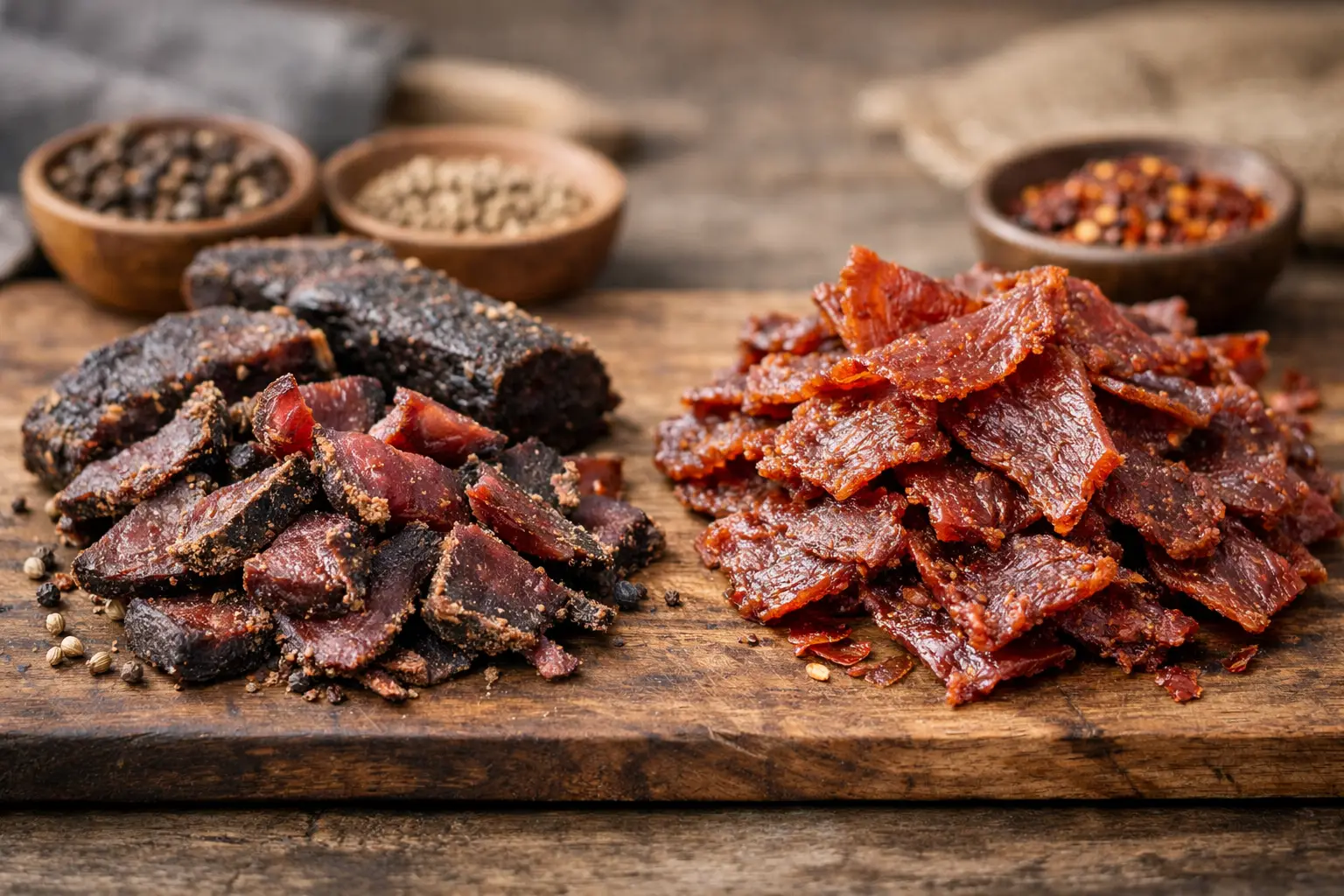
A proper meat snack should earn its spot in the pantry. The biltong vs jerky differences come down to far more than where each snack began - they change the flavour, bite, ingredients and the whole eating experience. Both are brilliant for road trips, work drawers and post-gym hunger, but they are made with very different traditions in mind.
For South Africans, biltong is a taste of home. For plenty of Australians, it is the premium dried meat snack they discover once and wonder why they waited so long. Jerky has its loyal following too. The right choice depends on whether you want a tender, richly spiced piece of air-dried beef or a chewier, often sweeter strip with a smoky edge.
Biltong vs jerky differences start with the process
Biltong is rooted in South African preservation traditions. It is typically made from larger, thicker cuts of beef, though other meats can be used. The meat is seasoned with a straightforward blend that commonly includes salt, vinegar, coriander and pepper, then hung to air-dry. Time, airflow and careful preparation do much of the work.
That vinegar step is a defining feature. It brings a gentle tang while helping create biltong's distinctive savoury profile. Coriander adds the familiar aromatic note that many South Africans know instantly. The result is not meant to taste like a sauce-covered snack. It is meant to let good meat shine.
Jerky generally begins as lean meat sliced into thin strips. It is usually marinated, then dried with heat in a dehydrator, oven or smoker. The marinade may include soy sauce, Worcestershire sauce, sugar, chilli, pepper, smoke flavour or other seasonings. Recipes vary widely, from classic peppered jerky to hot chilli or sweet barbecue styles.
Neither method is automatically better. They simply deliver different results. Air-drying thicker meat gives biltong its characteristic tender centre and fuller beef flavour, while heat-drying thin strips gives jerky its firmer, more consistent chew.
Thickness changes the bite
Pick up a piece of biltong and you will usually notice the difference before you take a bite. Biltong is often cut from thicker whole-muscle pieces and sliced after drying. Depending on how it has been dried, it can be soft and moist in the middle, medium-dry, or dry with a firmer chew. That choice is part of the enjoyment.
Jerky is normally thin from the start. Because it is cut into strips before it is marinated and dried, it tends to be drier and more uniform in texture. Some jerky is pleasantly tender, but most asks for a little more chewing than biltong.
If you prefer a snack that feels more like a quality cut of seasoned beef, biltong is likely your style. If you enjoy a longer-lasting chew while driving the ute, working through a busy afternoon or watching the footy, jerky may be the better fit.
Fat is handled differently
Another noticeable difference is fat. Traditional biltong can include a layer of fat, and for many fans that is the best bit. The fat carries flavour and creates a richer mouthfeel, especially in well-made, freshly sliced biltong. Lean biltong is also available for people who prefer a cleaner, less rich bite.
Jerky is usually made from very lean cuts because fat can become rancid more readily during storage. That makes jerky's texture more predictable, but it can also make the flavour feel leaner and drier. It is not a fault - it is a consequence of the method.
Flavour: savoury spice versus marinade
Biltong's flavour is generally meat-forward, salty, savoury and warmly spiced. Vinegar and coriander are the signature notes, with pepper adding lift. Chilli biltong can bring proper heat, but even then the beef remains the centre of attention.
Jerky takes its personality from the marinade. One bag may be smoky and peppery; another may be sweet, sticky and barbecue-forward. There are plenty of excellent jerky styles, especially when you want bold seasoning, but the flavour can sometimes be more about the sauce than the meat.
This is where personal taste matters most. A South African expat craving the familiar taste of a padkos stop will likely reach for biltong. Someone who loves sweet-and-smoky snacks might be happiest with jerky. And anyone who has only tried supermarket jerky may be surprised by how nuanced handcrafted biltong can be.
Ingredients and sweetness can vary
Biltong is commonly made with a short ingredient list: quality meat, salt, vinegar and spices. Traditional recipes do not rely on heavy sugary marinades, which is one reason biltong appeals to snackers looking for a savoury, protein-rich option. Still, every producer has its own recipe, so it is worth checking the label if specific ingredients matter to you.
Jerky recipes often use a marinade to build flavour and tenderness. That can mean added sugar, honey, molasses or sweet sauces, particularly in popular barbecue-style varieties. It does not mean all jerky is sweet or that biltong is always lower in every nutritional measure. Sodium, portion size, cut of meat and recipe all matter.
The practical takeaway is simple: choose based on the ingredients and flavour you genuinely enjoy, rather than assuming one packet is automatically the healthier choice. Premium dried meat is still a snack to savour, not a substitute for a varied diet.
Freshness matters more than the label
The words “biltong” and “jerky” tell you something about style, but not everything about quality. Great dried meat starts with good cuts, careful seasoning and a producer who pays attention to drying conditions. Poorly made biltong can be overly dry or bland. Poorly made jerky can be tough, overly sweet or dominated by artificial smoke flavour.
Freshness also makes a real difference, particularly with biltong. A batch prepared in small quantities and packed with care should have a clean aroma, a satisfying beef flavour and the texture promised on the pack. If you like your biltong wetter, choose it that way. If you prefer it dry enough to take camping, that is a fair call too.
At Steyn's Biltong & Jerky, the focus is on handcrafted South African-style dried meats made locally on the Sunshine Coast, so Australians can enjoy authentic lekkerness without compromising on freshness.
Which one should you choose?
Choose biltong when you want thick-cut, air-dried meat with savoury spice, a touch of vinegar tang and a tender-to-firm texture you can select to suit your preference. It is especially good for people who enjoy whole-muscle beef flavour, traditional South African seasoning and the occasional rich strip of fat.
Choose jerky when you want thin strips, a firmer chew and a bigger range of marinade-led flavours. It travels well, sits neatly in a desk drawer and suits snackers who enjoy smoky, peppery or sweet profiles.
There is no rule saying you have to pick a side. Keep jerky around for the long drive and biltong for the moment you want something properly satisfying. Once you know what each is made to be, choosing your next bag becomes less of a debate and more of a very lekker decision.