How to Store Unopened Jerky for Freshness
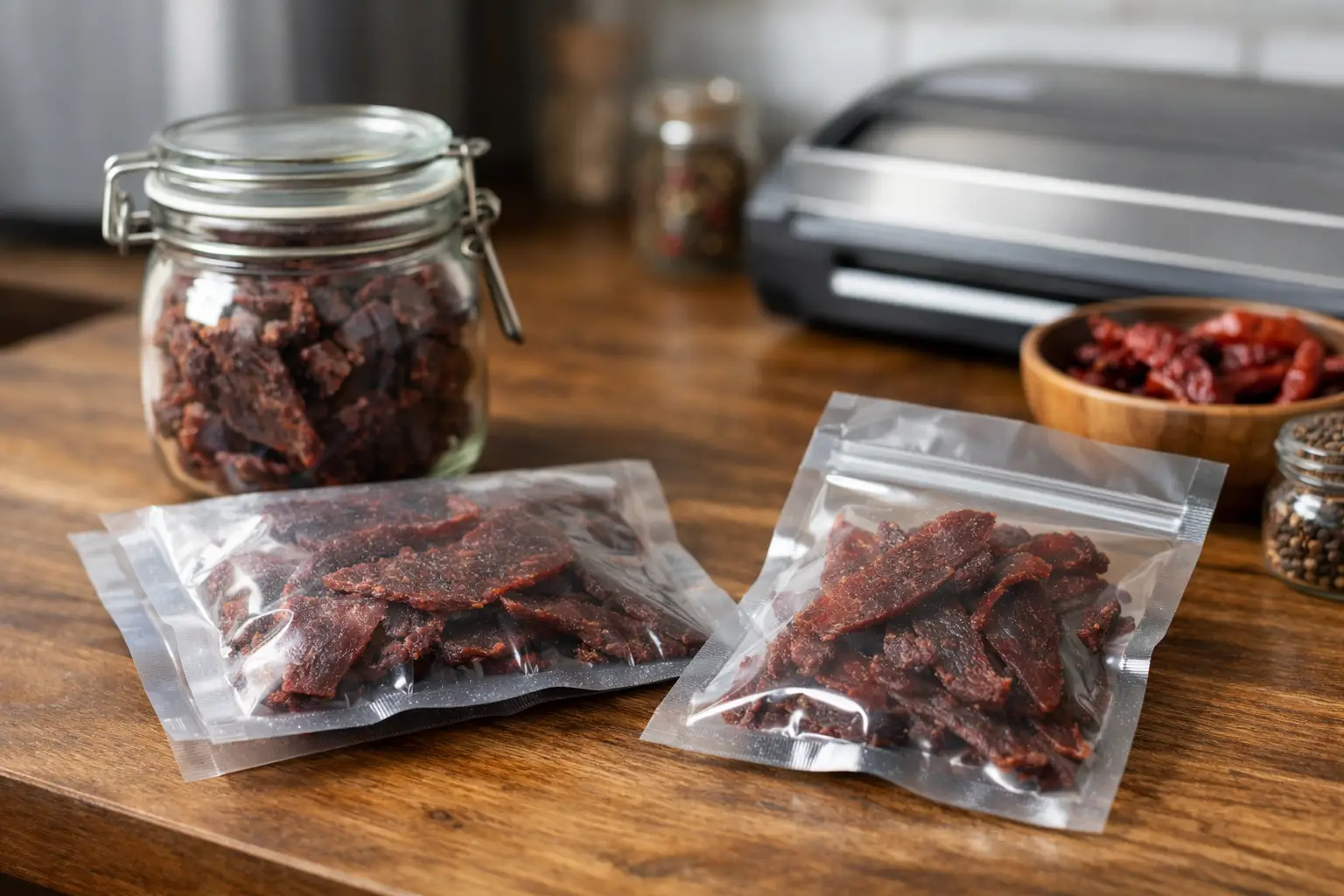
A fresh delivery of quality jerky deserves better than being tossed on top of the fridge or left rolling around in the ute. Knowing how to store unopened jerky properly helps preserve the rich flavour, satisfying chew and handcrafted character you bought it for - right up to the best-before date.
The good news is that unopened jerky is generally easy to keep. The key is less about complicated storage gear and more about avoiding its biggest enemies: heat, direct sunlight, moisture and damaged packaging. A cool, dry cupboard is usually the sweet spot for keeping the lekkerness intact.
How to store unopened jerky at home
Start with the packet label. Every jerky product is made, packed and sealed differently, so the storage instructions on the pack always come first. If it says to store in a cool, dry place, keep it in a pantry, kitchen cupboard or larder away from heat and humidity. If the label calls for refrigeration, follow that instruction from the moment it arrives.
For most unopened shelf-stable jerky, a dark pantry shelf is a far better choice than a benchtop. It keeps the pack away from sunlight streaming through the kitchen window and protects it from the warm spots that build up near ovens, kettles, dishwashers and coffee machines.
Choose a shelf that stays reasonably consistent through the day. The cupboard beside the cooktop may be convenient, but it can get surprisingly warm during dinner prep. The cupboard above the fridge can also run hotter than expected because appliances release heat as they work.
A good rule is simple: if you would not want to sit there through a Queensland summer afternoon, your unopened jerky probably should not either.
Keep the original sealed pack intact
A properly sealed package is part of what protects jerky before opening. There is no need to transfer unopened packs into jars, tubs or zip bags. In fact, handling them unnecessarily can make it easier to puncture the packaging or lose track of the date information.
Leave the jerky in its original pack until you are ready to enjoy it. This keeps the best-before date, batch details and storage directions close at hand. It also lets you check the seal before putting the pack away.
Before storage, give each packet a quick look. The pack should be fully sealed, with no tears, pinholes, loose seams or signs that air has entered where it should not. If a packet has been damaged in transit, do not simply stash it in the pantry and hope for the best. Set it aside, check the product instructions and contact the seller if needed.
Vacuum-sealed packs can look tight around the product, while other packs may have a little headspace. Neither appearance alone tells you whether there is a problem. What matters is that the seal and packet are intact, and that the product looks as expected for that particular style of jerky.
Temperature matters more than most people think
Jerky is made for convenience, but it is not indestructible. Repeated exposure to heat can affect flavour and texture over time, even when the package remains unopened. A pack left in a hot car, on a sunny windowsill or in a garage through summer is not getting the same treatment as one kept in a cool pantry.
For Australian homes, this is especially worth considering between late spring and early autumn. A cupboard in an air-conditioned home may stay comfortably cool, while a kitchen in a coastal Queensland heatwave can become much warmer. It depends on your home, the season and where the pantry sits.
If your house regularly gets hot and the label permits refrigeration, the fridge can be a sensible option for unopened jerky. Keep it away from strong-smelling foods and make sure the packet stays dry. Refrigeration is not automatically better for every product, though. Cold storage can sometimes alter the texture of dried meats, so do not override the pack instructions just because the weather is warm.
Freezing unopened jerky is usually unnecessary when you plan to enjoy it within its best-before period and can store it correctly. Save the freezer for situations where the manufacturer specifically allows it or where you need a longer storage solution. Again, the product label is the final word.
Protect unopened jerky from humidity
Moisture is the reason a cool, dry cupboard beats many other spots around the house. Avoid storing jerky beneath the sink, beside a washing machine, in a damp garage or near an appliance that produces steam. A pantry near the dishwasher may be convenient, but it can be a poor choice if warm, humid air reaches the shelf each time a cycle finishes.
The fridge presents a similar trade-off. It is cool, but condensation can become an issue when a cold packet is repeatedly taken out into warm air and put back again. If you refrigerate unopened jerky according to its instructions, leave it there until you are ready to open it rather than moving it back and forth.
For bulk orders, keep the shipping carton only if it is clean and dry, then place the sealed packs inside it on a pantry shelf. This can help block light and keep your stash organised without trapping moisture. Just do not store the carton directly on a damp floor or in a humid storage area.
Travelling with unopened jerky
Jerky is a brilliant road-trip companion, but the boot of a parked car is not a long-term pantry. If you are taking unopened packs away for a weekend, keep them in a cooler part of your luggage and out of direct sun. An insulated bag can help during travel, particularly on a long drive, but it should stay dry inside.
For camping, caravanning or beach holidays, bring only what you expect to use. Keep the unopened packs in a shaded cupboard or sealed storage box, away from the camp kitchen heat and well clear of water. Do not leave them in a tent that bakes during the day or in the glovebox while you are off at the beach.
Flying with jerky can involve separate airline and destination rules, particularly for international travel. Check the relevant requirements before packing it. For travel within Australia, protecting the pack from heat and crushing is usually the practical priority.
Check dates, then rotate your stash
Premium jerky has a best-before date for a reason. It is not a challenge to see how long a packet can survive at the back of the pantry. When a new order arrives, place the packs with the earliest best-before date at the front and newer packs behind them. This simple first-in, first-out habit means the packet you reach for is the one that should be enjoyed first.
If you keep a decent biltong and jerky stash for visitors, footy nights or snack emergencies, write the month on the outside of a storage box rather than marking individual packets. The original date remains easy to read, and the box stays tidy. Check the packs every so often, especially after a very hot spell or if you have moved house.
Use your senses when you eventually open a packet, but do not rely on them instead of proper storage and date checks. If the packaging is damaged, the product seems unusual for its style or you are unsure how it has been stored, do not take chances. Follow the manufacturer’s guidance.
A few storage mistakes worth avoiding
Most unopened jerky storage problems come down to one of four habits:
- Leaving packs in a hot car, garage, caravan or sunny kitchen spot.
- Storing them near steam, moisture or strong food odours.
- Ignoring a torn seal or damaged packet after delivery or travel.
- Forgetting the best-before date because the good stuff was hidden at the back of the pantry.
None of these requires a fancy fix. A cool cupboard, an intact packet and a quick date check do most of the work.
Steyn's Biltong & Jerky is handcrafted on the Sunshine Coast and packed for the journey to jerky lovers around Australia, but the final stretch happens in your pantry. Give unopened packs a cool, dry, shaded home, and when the craving hits, you can open one knowing the proper lekkerness has been looked after.