What Is Droewors Made Of? Real Ingredients
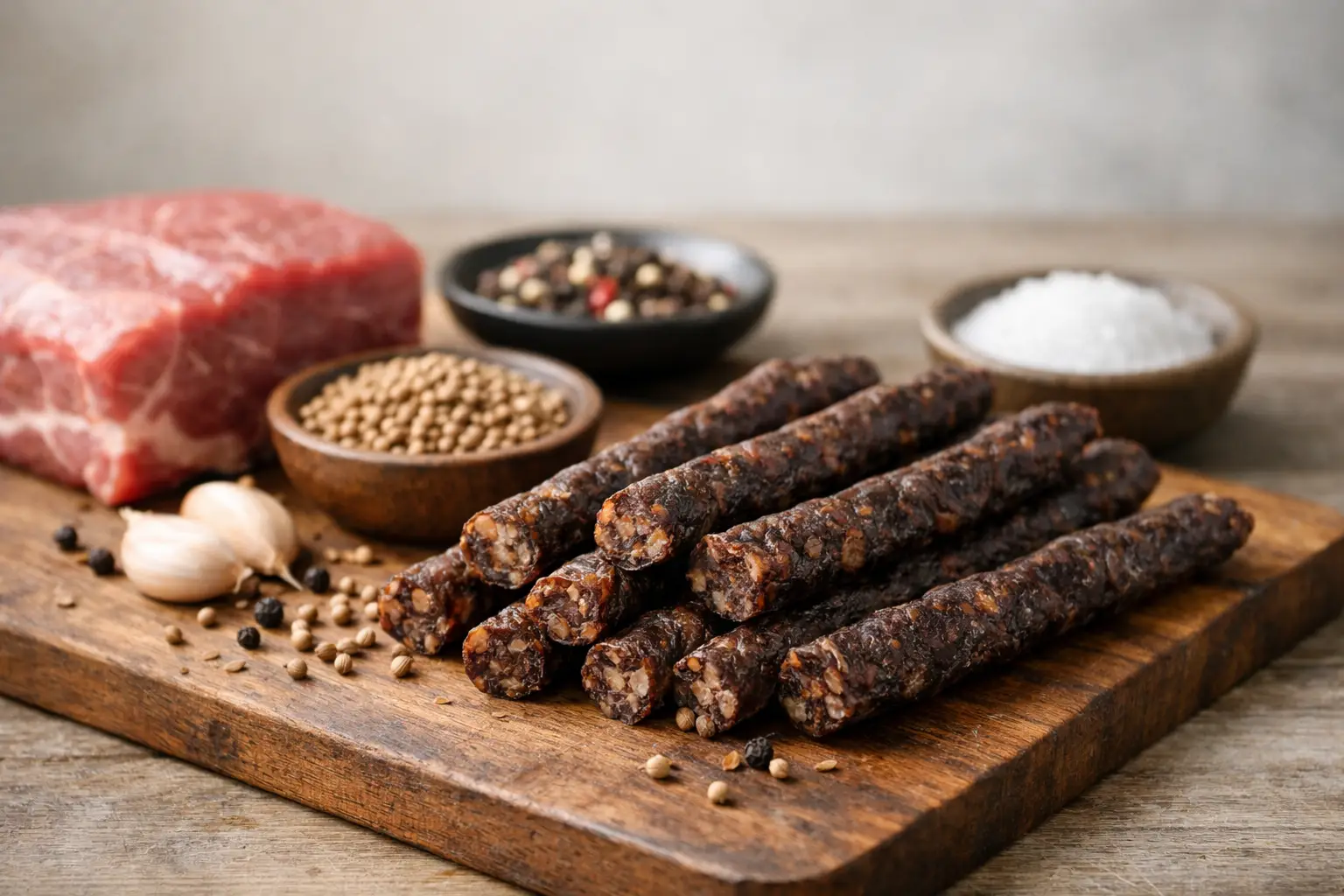
A proper coil of droëwors has a snap when you bite it, a rich savoury aroma and that unmistakable coriander-led South African flavour. So, what is droewors made of? At its core, it is a thin dried sausage made from quality meat, a carefully measured amount of fat, vinegar, salt, spices and sausage casing. Simple ingredients, but the balance is where the lekkerness lives.
Unlike a heavily processed snack, traditional droëwors is all about letting good meat and honest seasoning do the hard work. The sausage is mixed, stuffed into thin casings and dried slowly until it becomes firm, flavourful and ready to snack on.
What is droewors made of, traditionally?
Traditional droëwors is most commonly made with beef. The meat is minced rather than sliced, then combined with beef fat for flavour and texture. Salt, vinegar and a classic blend of spices are worked through the mixture before it is filled into casing and dried.
The exact recipe varies between makers and families, which is part of the charm. One batch might bring more coriander warmth, while another has a little more black pepper or a brighter vinegar tang. But the essential formula remains recognisably South African: seasoned meat sausage, dried rather than cooked.
The main ingredients generally include:
- Beef or another quality red meat
- Beef fat
- Salt and vinegar
- Coriander, usually toasted and ground
- Black pepper and other warming spices
- Natural or collagen sausage casings
Some recipes include a small amount of sugar to round out the seasoning, while others use spice blends that may contain cloves, nutmeg or chilli. The best way to know precisely what is in a particular droëwors is to check that product’s ingredient label, especially if you have dietary requirements or allergies.
Quality meat is the starting point
Beef is the traditional foundation because it has a full, savoury flavour that holds up beautifully through drying. It also gives droëwors its familiar hearty chew. Quality matters here: drying concentrates everything in the sausage, including the flavour of the meat.
While beef is the classic choice, droëwors can also be made with game meats, lamb or mixed meats. Each creates a different result. Game droëwors can be leaner and more earthy, while lamb brings a richer flavour. These versions can be excellent, but they are variations on the traditional beef style rather than the everyday benchmark most South Africans know.
The cut of meat matters less than the overall quality, freshness and lean-to-fat ratio. A well-made sausage should taste meaty first, not overly salty, greasy or masked by seasoning.
Why fat belongs in droëwors
Fat is not filler in a proper dried sausage. It carries flavour, softens the chew and helps prevent the finished droëwors from becoming dry and crumbly. The trick is restraint. Too little fat can leave the sausage hard and brittle; too much can make it oily or heavy.
Beef fat is traditionally used alongside lean beef. As the sausage dries, moisture reduces and the remaining fat helps create the rich, satisfying mouthfeel that separates a great droëwors from an average one. This is why droëwors is usually more tender and rounded in flavour than a very lean strip of biltong.
The signature flavour comes from spice and vinegar
If beef provides the body, coriander provides the soul. Toasted coriander seed is one of the most recognisable flavours in traditional South African dried meats. It adds a warm, slightly citrusy, nutty note that cuts through the richness of the meat and fat.
Black pepper is another common essential, bringing gentle heat without turning the snack into a chilli sausage. Depending on the recipe, you may also taste clove, nutmeg, allspice, chilli or garlic. These spices should support the meat, not overwhelm it.
Vinegar has an equally important role. It contributes the tang that many people associate with classic biltong and droëwors, while helping the seasoning penetrate the meat mixture. The result should be balanced: savoury, gently spiced and bright enough to keep you reaching for the next piece.
Salt is necessary for flavour and preservation, but a premium droëwors should not simply taste salty. When meat, fat, spice, salt and vinegar are properly balanced, you get depth rather than a sharp hit of seasoning.
Casings give droëwors its familiar shape
Droëwors is stuffed into thin sausage casings, which is why it is often sold in long strands or coils. Natural casings are traditionally associated with old-school sausage making and give a distinct bite. Collagen casings are also widely used and can offer consistency in size and drying.
The casing is not merely packaging. It holds the minced meat mixture together while it dries and helps shape the finished texture. Thin casings are important because droëwors needs to dry evenly. A thicker sausage would take longer to dry and would create a different eating experience.
The familiar coil is practical as well as nostalgic. It makes droëwors easy to portion, share on a road trip or keep on hand for a protein-rich snack between meetings, after training or while watching the footy.
How drying changes the ingredients
Before drying, droëwors begins as a seasoned fresh sausage mixture. The transformation happens during the drying process, when moisture is gradually removed under controlled conditions. This concentrates the beefy flavour, firms the texture and creates the snack Australians and South Africans love.
Drying is where patience earns its place. If the process moves too quickly, the outside can become overly hard before the inside develops the right texture. If it is too slow or poorly controlled, quality can suffer. Traditional knowledge and careful production make a genuine difference.
The finished droëwors should have a satisfying chew, but it should not feel like you are battling it. Some people prefer it drier and firmer; others favour a slightly softer centre. Neither preference is wrong. It comes down to personal taste and the style of the maker.
Is droëwors the same as biltong, jerky or cabanossi?
They all belong in the premium meat-snack family, but they are made differently. Biltong begins as whole cuts of meat that are seasoned and air-dried, then sliced. Jerky is generally sliced meat that is marinated and dried, often with a sweeter or smokier profile depending on the recipe.
Droëwors starts as minced, seasoned sausage meat in casing. That gives it a more even, sausage-like bite and makes fat part of the traditional recipe. Cabanossi is also a sausage, but it is commonly smoked or cooked as part of its production, giving it a different flavour and texture again.
If you love the coriander-and-vinegar character of biltong but want a snack with more chew and richness, droëwors is the natural next grab. It is unmistakably its own thing, not just biltong in a different shape.
What to look for when choosing droëwors
A quality droëwors should put meat front and centre. Look for a clear ingredient list, a traditional spice profile and a product that smells savoury and appetising rather than excessively oily or artificial. A little variation in appearance is normal with handcrafted dried meat - it is a sign you are dealing with a real food product, not a uniform factory imitation.
If you are managing allergies, always read the label closely. Spice blends may contain allergens, and casings or processing methods can differ. The same goes for storage instructions. Dried meats are convenient, but the producer’s advice on storage and best-before dates should always guide how you keep your droëwors at home.
At Steyn’s Biltong & Jerky, the aim is simple: handcrafted South African-style dried meat made locally on the Sunshine Coast, with the flavour and care that make a proper snack feel like a treat.
Next time you tear off a piece of droëwors, notice what makes it so moreish: quality meat, just enough fat, coriander warmth, a flicker of vinegar and time. That is the kind of honest South African lekkerness worth keeping in the snack drawer.