Are Dried Meats Gluten Free? What to Check
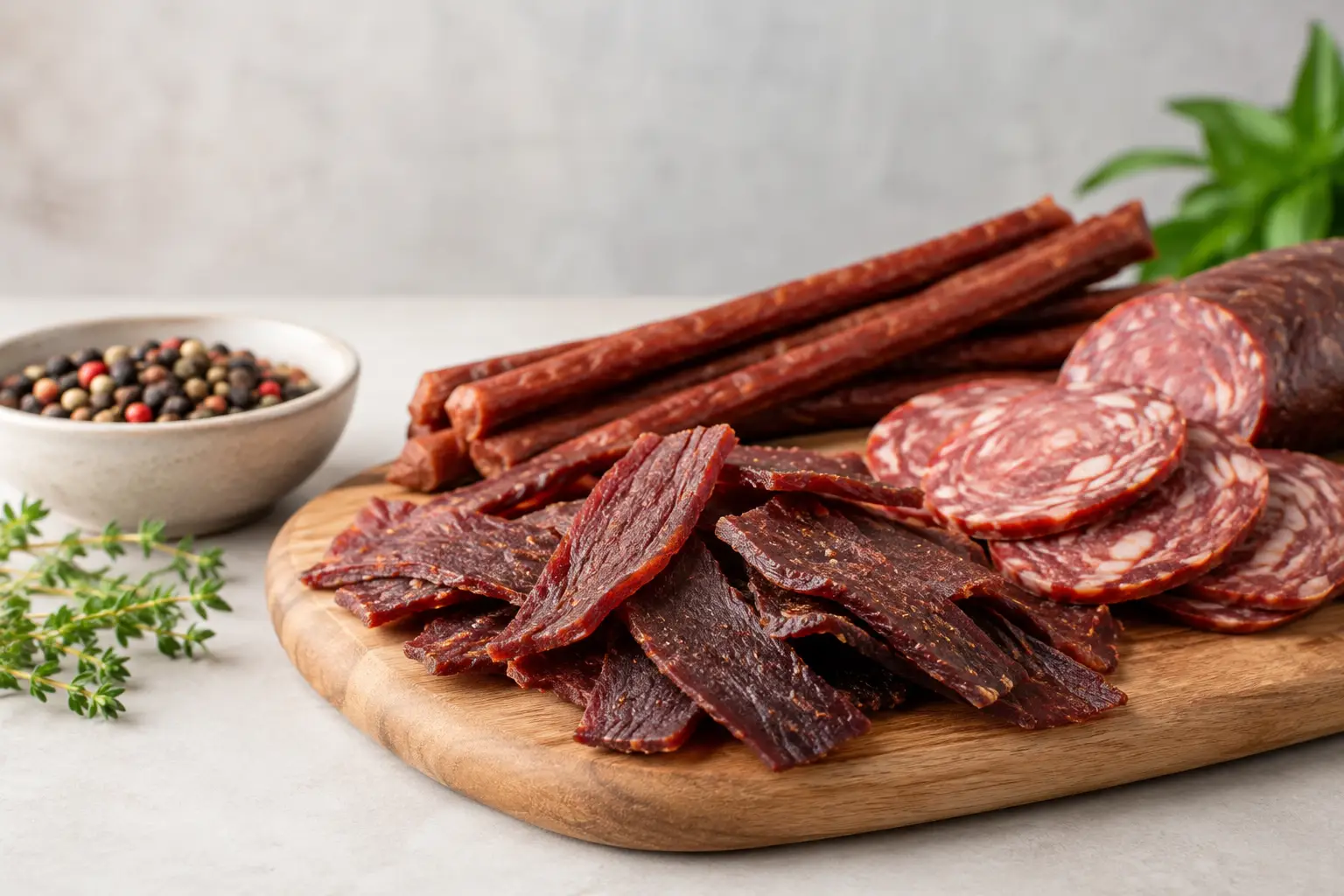
A proper bag of biltong should be all about the meat, spice and that unmistakable savoury lekker flavour - not a game of ingredient-label detective. Still, if you are asking, are dried meats gluten free, the honest answer is: often, but not automatically. The cut of meat is not usually the concern. It is the seasoning, marinade, curing blend and handling behind it that can change the answer.
For Australians buying biltong, jerky, droëwors or cabanossi, the safest approach is straightforward: check the product’s own ingredient and allergen information every time. Recipes vary wildly between makers, even when two products look nearly identical on the shelf.
Are dried meats gluten free? It depends on the recipe
Plain meat, salt and many familiar spices do not contain gluten. That is why traditionally styled dried meats can be a simple choice ingredient-wise. But dried meat products are rarely made with only meat and salt. The flavour is built through carefully chosen spices, vinegar, marinades and curing ingredients, and that is where gluten may enter the picture.
Biltong and droëwors recipes often lean into bold, uncomplicated seasoning: coriander, pepper, salt, vinegar and a touch of spice. That traditional direction can mean fewer unexpected extras, but tradition alone is not a gluten-free guarantee. Each producer has its own recipe, suppliers and production process.
Jerky deserves particularly close attention. Many jerky marinades use soy sauce, teriyaki-style sauces, malt-based flavourings or other prepared condiments. Standard soy sauce commonly contains wheat, while a sauce that sounds harmless on the front of the pack may include gluten-containing ingredients in its fine print.
Cabanossi can vary too. Some recipes are clean and meat-forward, while others may use binders, fillers, flavour enhancers or seasoning blends that need checking. The product name does not tell the full story - the label does.
Where gluten can hide in dried meat snacks
Gluten is not always called out in big, obvious lettering within an ingredient list. It can be part of a compound ingredient, a premade spice blend or a marinade. That does not make every flavoured dried meat unsuitable. It simply means flavour is worth investigating rather than assuming.
Keep an eye out for ingredients such as wheat, barley, rye, malt, regular soy sauce, teriyaki sauce, malt vinegar and breadcrumbs. Some stock powders, smoke flavourings, seasonings and hydrolysed vegetable proteins can also warrant a closer read, particularly when the full source ingredient is not immediately clear.
The words “spices” or “seasoning” are not automatically a red flag. Plenty of spice blends are free from gluten-containing ingredients. But a detailed ingredient list and a clear allergen declaration make it much easier to buy with confidence.
Packaging claims can be useful, but they are not all equal. “No added gluten ingredients” and “gluten free” may be used differently depending on the product and the producer’s controls. Look for precise wording, then read it alongside the ingredients and allergen statement rather than relying on one bold claim on the front of the packet.
The label checks worth making before you buy
A few seconds with the back of the pack can save plenty of guesswork. Start with the ingredient list, then look for the allergen declaration. In Australia, packaged foods must declare specified allergens when they are present as ingredients, helping shoppers quickly spot wheat and gluten-containing cereals.
Then check whether the product is flavoured. Original, traditional or salt-and-pepper products may have a shorter ingredient list than chilli, barbecue, honey, smoky or teriyaki varieties. That is not a rule - a hot chilli biltong can still be beautifully uncomplicated - but extra flavour layers create more ingredients to assess.
It also pays to check each flavour separately. A producer might offer one gluten-free biltong and another flavour made with a sauce containing wheat. Do not assume a whole range follows the same recipe just because the packaging has a shared look.
If information is missing or unclear, ask the producer directly before placing an order. A specialist maker should be able to explain the relevant ingredients and whether products are handled on shared equipment. Clear answers are part of premium service, right alongside fresh product and great flavour.
Cross-contact matters as much as the ingredient list
A dried meat can contain no gluten ingredients and still be made in a facility that handles products containing gluten. This is often referred to as cross-contact. It can occur through shared mixers, slicing equipment, benches, spice scoops, storage containers or packing areas if controls are not carefully managed.
That is why an ingredient list is only one part of the picture. People looking for a gluten-free product may also want to know how a maker manages production, especially where multiple marinades and flavoured products are prepared in the same space.
There is no need for vague marketing here. The useful details are practical ones: whether equipment is shared, whether batches are scheduled separately, whether cleaning steps are used between runs and whether the business makes a specific gluten-free claim for that product. If a brand cannot provide clarity, choose a product that can.
For handcrafted dried meats, small-batch production can be a real advantage when the maker has strong processes and knows exactly what goes into each batch. It also means customers should never presume that “artisan” automatically means gluten free. Handcrafted quality and allergen clarity should sit side by side.
Biltong, jerky and droëwors: do not treat them as identical
These favourites share a love of quality meat and big flavour, but their recipes can be quite different. Biltong is often associated with a classic vinegar-and-spice profile, while jerky is more likely to be marinated in sauces. That gives jerky a broader range of flavour possibilities, but also more potential for gluten-containing ingredients.
Droëwors and cabanossi bring another variable: sausage-style recipes. Along with seasoning, these may include curing ingredients and, depending on the maker, binders or other additions. A traditional-minded producer may keep the formula focused, but the only dependable answer remains product-specific.
The practical takeaway is simple. If you find a dried meat snack you love, verify that exact product and exact flavour. A classic biltong slab, chilli biltong sticks, smoky jerky and spicy droëwors can all have different ingredient profiles, even from the same maker.
Buying premium dried meat without the guesswork
When you are choosing dried meats online, good product information should be easy to find before the parcel reaches your door. Look for a complete ingredient list, a visible allergen statement and flavour descriptions that match the label. This is especially handy when stocking the pantry, sending a gift or ordering your favourite South African-style snacks across Australia.
At Steyn’s Biltong & Jerky, the focus is on handcrafted flavour and proper South African-style lekkerness. As with any food purchase, check the current product listing and packaging for the specific variety you want, since ingredients and product details can change over time.
Avoid relying on broad assumptions such as “all biltong is gluten free” or “jerky always contains soy sauce”. Both statements miss the nuance. A well-made product is defined by its own recipe, not by the category printed on the label.
The best dried meat purchase is one where the flavour has your full attention. Read the label, ask a clear question if needed, and choose the product whose ingredients are as straightforward and satisfying as the first bite.