Biltong Spice Profile and Its Signature Flavour
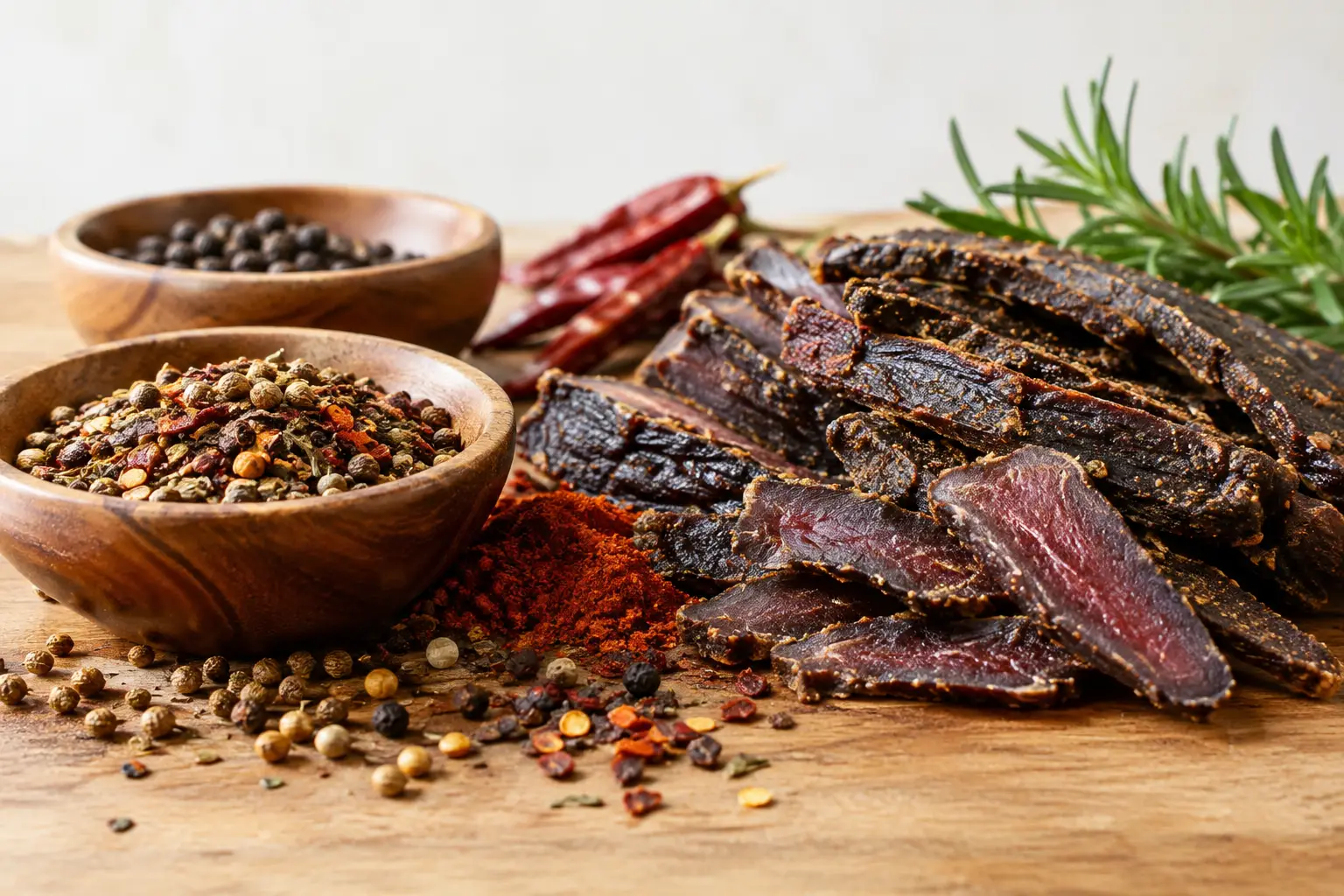
A proper biltong spice profile announces itself before the first bite. There is the warm, toasted lift of coriander, a firm crack of black pepper and that unmistakeable tang that keeps the rich savoury flavour clean rather than heavy. It is bold, aromatic and deeply familiar to anyone raised around a South African kitchen, braai or padkos stop.
That balance is the point. Great biltong should not taste like a random shower of spices trying to outdo the beef. Each note has a job: some bring warmth, some bring sharpness, some round out the saltiness, and together they let the meat remain the star. That is the lekkerness people remember.
The classic biltong spice profile
Coriander is the heart of the traditional flavour. Usually toasted before it is crushed, coriander brings a warm, nutty fragrance with faint citrus and floral notes. It is not the bright, leafy flavour of fresh coriander. In biltong, it is earthy and rounded, sitting beautifully against beef’s natural savouriness.
Black pepper provides the familiar bite. Depending on the grind, it can arrive as a quick peppery spark or build slowly through the chew. A coarser grind tends to make the spice feel more lively and rustic, while a finer grind blends more evenly into the overall seasoning. Neither is automatically better. It depends on whether you want distinct bursts of pepper or a smoother, more even finish.
Vinegar is another essential part of the experience, even though it is not a dry spice. Its tang cuts through the richer notes and gives biltong its recognisable edge. Malt vinegar often delivers a rounded, classic tang, while cider vinegar can taste a little brighter and fruitier. The flavour should be present without turning the slice sour. When it is well judged, it makes you reach for another piece.
Salt anchors the entire profile. It sharpens the spices, supports the savoury character and makes coriander and pepper taste more complete. Too little, and the profile can feel flat. Too much, and every other flavour disappears behind it. Premium biltong earns its keep in that narrow, satisfying middle ground.
Why coriander matters so much
If you had to name the aroma most closely linked with traditional South African biltong, toasted coriander would be right at the front. The seeds are often gently heated to wake up their oils, then cracked rather than pulverised into dust. That approach gives the seasoning texture as well as aroma, with tiny specks that release flavour as you eat.
Coriander also brings harmony. Pepper can be fierce, vinegar can be sharp and salt can be forceful. Coriander softens their edges without making the flavour timid. It adds warmth rather than heat, which is why a classic biltong spice blend can feel generous and full without relying on chilli.
There is, however, no single coriander setting that defines every good batch. Some families favour a more fragrant, coriander-forward coating. Others keep it restrained and let pepper take the lead. That variation is part of the tradition, not a break from it. South African flavour has always had room for personal preference.
The supporting notes that change the finish
Beyond coriander, pepper, vinegar and salt, a biltong seasoning may include a few quieter players. They should support the main profile, not turn it into an unrecognisable spice rub.
Brown sugar is one common balancing note. Used with a light hand, it does not make biltong sweet. Instead, it rounds off vinegar’s tang and helps create a fuller finish. The difference is subtle but noticeable: one version may feel leaner and sharper, while another lands with a softer, more rounded savouriness.
Chilli changes the experience more directly. A chilli biltong should still taste like biltong first, with coriander and beef clearly present beneath the heat. The best versions build gradually rather than blasting the palate from the opening bite. If the only thing you can taste is heat, the spice profile has lost its way.
Garlic, onion, smoked paprika and Worcestershire-style savoury notes can also appear in modern variations. These can be delicious, particularly for snackers who enjoy a bigger, more contemporary flavour. But they create a different lane from a classic profile. A smoky, garlic-heavy biltong may be packed with character, yet it will not have the same clean coriander-and-vinegar signature that many South Africans crave.
The spice profile changes with the cut
The same seasoning can read differently depending on the meat in front of it. A lean, firm slice puts pepper and vinegar into sharper focus. A richer, marbled piece can make coriander feel sweeter and more aromatic, while the salt seems softer against the fuller beef flavour.
Slice thickness matters too. Thin slices can deliver a quick spice hit and a clean finish. Thicker slices take their time, allowing the seasoning and meat to unfold together. That is why two people can eat the same biltong and describe it differently: one may love the peppery tang, while another notices the warm coriander first.
Moisture level also affects flavour perception. Drier biltong tends to concentrate the seasoning, often making pepper and salt seem more pronounced. Wetter biltong can feel more rounded and meaty, with vinegar and coriander lingering for longer. There is no universal winner here. It comes down to the texture and flavour intensity you enjoy.
Classic, chilli or garlic: know your craving
When choosing a flavour, it helps to think about the moment rather than declaring one profile the best. Classic biltong is the all-rounder. It suits the road trip, the footy watching session, the desk drawer and the plate you put out when mates drop in. Its savoury warmth has enough personality to feel special without demanding all the attention.
Chilli biltong is for those times you want more energy in the bite. It works brilliantly alongside a cold drink or when a plain savoury snack simply will not do. Look for warmth that complements the meat, rather than a blunt burn that hangs around long after the flavour has gone.
Garlic and other more pronounced savoury blends appeal to people who enjoy a bolder, fuller profile. They can be excellent, but they are less about nostalgia and more about a new take on a trusted favourite. For South Africans missing the taste of home, the classic coriander-led style is often where the heart goes first.
What to notice when you taste biltong
A standout piece has a clear beginning, middle and finish. First comes the aroma: toasted coriander, pepper, perhaps a touch of vinegar. Then the beef arrives, savoury and full. Finally, the seasoning lingers without leaving an overly salty, sour or powdery aftertaste.
Pay attention to whether the spices feel integrated. You want a profile that tastes part of the biltong, not a coating pasted onto the outside. Visible coriander and pepper are a good sign of character, but balance matters more than how dramatic the surface looks.
Freshness plays a role as well. Aromatic spices lose their sparkle over time, especially once a pack is opened. Keep biltong sealed as directed and enjoy it while those coriander and pepper notes are still doing their best work. A premium snack deserves more than being forgotten at the back of the pantry.
At Steyn’s Biltong & Jerky, the aim is simple: handcrafted South African flavour with the confidence to let the meat, spice and tradition speak for themselves. Whether you reach for classic or turn up the chilli, choose the profile that makes the next slice feel like the right one.