South African Biltong Guide for Aussie Snackers
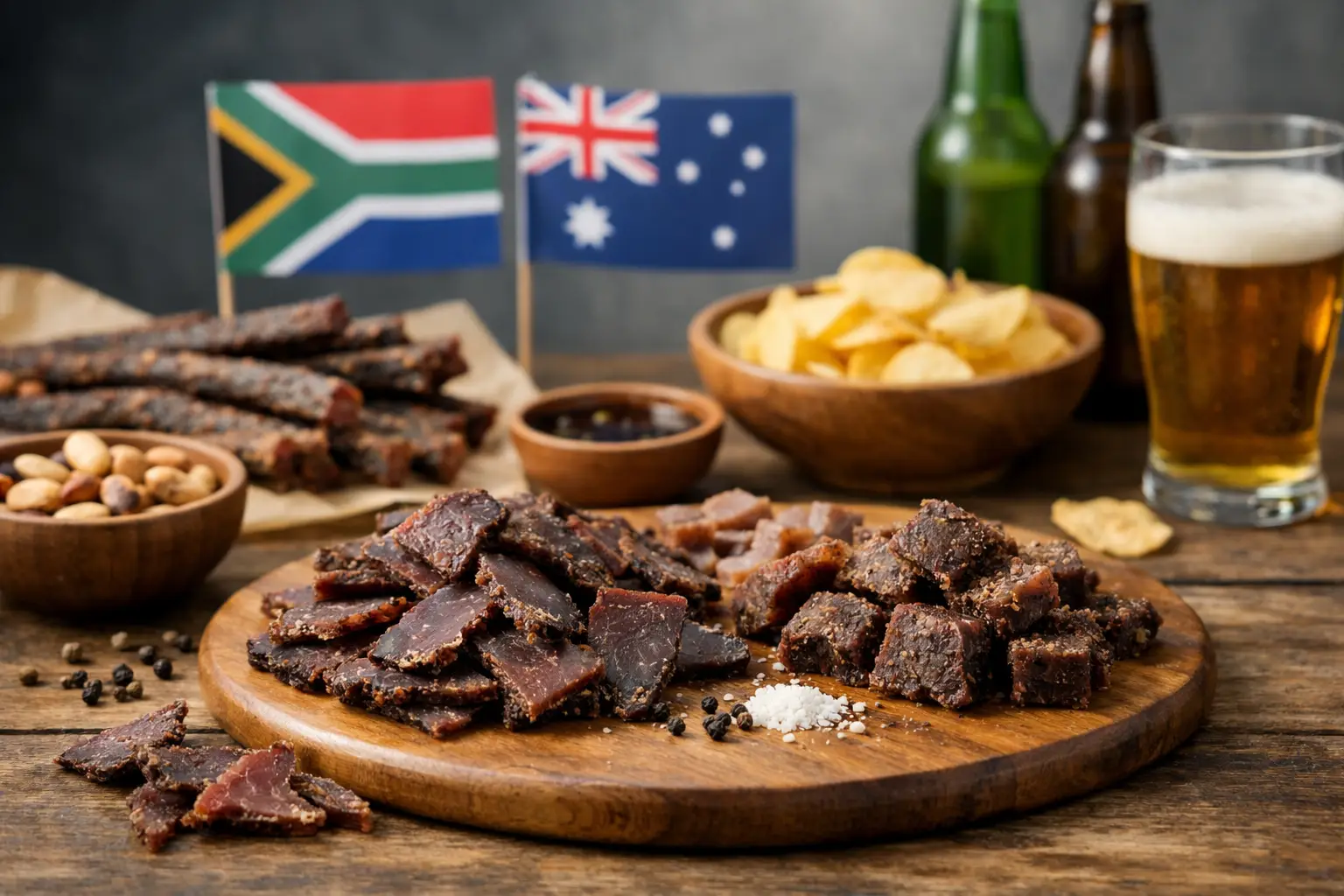
The first bite of proper biltong should not taste like supermarket jerky with a different label. It should be savoury, gently spiced, satisfyingly chewy and full of real beef flavour. This South African biltong guide is for Aussies who want to know what makes it special, how to choose their preferred cut and dryness, and how to get maximum lekkerness from every pack.
What is South African biltong?
Biltong is a traditional South African dried meat made by curing whole cuts of beef with vinegar, salt and a distinctive spice blend before air-drying them. Coriander seed is the signature flavour, usually supported by black pepper and other seasonings. The result is rich and meaty rather than sugary, with a depth that comes from careful curing and drying rather than a heavy marinade.
Traditionally, biltong starts as thicker slabs or strips of beef. Once cured, the meat is hung to dry in moving air. That process concentrates the flavour while retaining a tender centre when the biltong is cut at the wetter end of the scale.
It is food with heritage, but it fits brilliantly into everyday Australian life. Keep some in the desk drawer for the 3 pm snack attack, take it on a road trip, pack it for a camping weekend or put it out with drinks when ordinary chips simply will not do.
Biltong versus jerky: the difference you can taste
Biltong and jerky are both dried meat snacks, yet their preparation and eating experience are quite different. Jerky is often made from thinner slices of meat that are seasoned or marinated, then dried with heat. It can be sweet, smoky, soft or quite firm depending on the recipe.
Biltong is generally cured in vinegar and spices before being air-dried as a thicker piece of meat. It is usually sliced after drying, which helps preserve its more substantial texture. A good piece can have a dry outer edge and a tender, darker centre - especially when you choose a wet or medium style.
Neither is automatically better. If you like smoky, sweet flavours and a lighter chew, jerky may be your go-to. If you want bold beef flavour, coriander-led seasoning and a more traditional dried-meat texture, biltong is the clear winner. At Steyn's Biltong & Jerky, the focus is on handcrafted South African-style dried meats made locally on the Sunshine Coast, so Australians can enjoy that familiar flavour without waiting for a care package from home.
A South African biltong guide to cuts and dryness
The best biltong for you depends less on what is labelled “best” and more on how you enjoy it. The cut affects richness and chew, while the drying level changes the texture dramatically.
Lean or fatty biltong?
Lean biltong has a cleaner bite and a firmer texture. It is a popular choice for people after a protein-rich snack with less visible fat, and it is excellent when finely sliced.
Fatty biltong has a creamy, savoury richness that many South Africans consider essential. The fat carries flavour and softens the chew, particularly in wetter biltong. If you are new to it, do not assume the white fat is a flaw. In a quality cut, it is part of the experience.
Choose lean when you want a neat, everyday snack. Choose fatty when you are chasing full-bodied flavour and a proper traditional treat. Some households keep both on hand because the mood changes.
Wet, medium or dry?
Dryness is personal. It is also where first-time buyers can be surprised, because “wet” biltong is not wet in the everyday sense. It is cured and dried, but retains more moisture in the middle.
Wet biltong is softer, darker and more tender. It delivers a big hit of beef flavour and is best enjoyed promptly. Medium biltong sits in the sweet spot for many snackers: chewy, flavoursome and still tender through the centre. Dry biltong is firmer and more shelf-stable in feel, with a concentrated flavour and a classic chew.
If you are unsure, start with medium. It gives you the character of biltong without being too soft or too firm. From there, it is easy to work out whether you prefer more tenderness or more chew.
How biltong gets its signature flavour
Good biltong does not need a long list of loud flavours. The quality of the beef matters first, then the balance of vinegar, salt and spice. Coriander is the traditional hero, bringing its warm, toasted aroma to the finished meat. Pepper adds bite, while the curing process gives biltong its tangy backbone.
The drying stage is where patience earns its place. Dry too quickly and the outside can harden before the centre develops properly. Dry too far and a tender cut can become overly tough. When it is done well, the texture feels intentional, not accidental.
That is also why freshness matters. Biltong is not just a generic packet snack. It is a crafted product, and it tastes best when the meat, spice and moisture level are treated with respect.
How to serve biltong beyond the snack bowl
There is absolutely nothing wrong with eating biltong straight from the pack. In fact, that is often the best test of its quality. But it is also one of the easiest ways to bring a little South African character to simple meals.
Finely chopped biltong adds a salty, savoury lift to scrambled eggs, omelettes and avocado on toast. Use it in a toasted sandwich with cheese and tomato, or scatter it over a crisp salad instead of bacon bits. A few slices beside cheddar, pickles and crackers make an easy grazing board with serious personality.
For something more substantial, add small pieces near the end of cooking to creamy pasta, potato bake or a braai-inspired burger. Avoid cooking it hard for too long, though. Heat can tighten the meat and mute the spice. Think of biltong as a finishing ingredient rather than something that needs to be fried into submission.
Storing biltong for the best texture
The right storage method depends on your chosen dryness and how quickly you plan to finish it. Biltong likes to breathe more than many packaged snacks, so avoid trapping it in a warm, damp environment.
For short-term snacking, keep it in a cool, dry place in its original packaging or a suitable container. Once opened, follow the storage guidance on the pack and keep it away from direct sun, heat and moisture. If your biltong is on the wetter side, refrigeration may be the better option, particularly in an Australian summer.
Do not be alarmed if a natural white bloom appears on dried meat. It can be harmless salt or fat crystallisation, but any unusual smell, sticky surface or coloured mould deserves caution. When in doubt, do not eat it. Quality snacks should be delicious, not a gamble.
Choosing biltong online with confidence
Buying biltong online is wonderfully convenient, but the product details matter. Look for clear information about the style, whether it is sliced or in a whole piece, the flavour profile and the expected drying level. Fresh production and prompt delivery are especially valuable when you prefer medium or wet biltong.
A whole piece gives you more control. Slice it thick for a softer, generous bite or shave it thin for grazing boards and sandwiches. Pre-sliced biltong wins on convenience and is ideal for lunchboxes, work snacks and sharing. Neither option is superior - it depends on whether you value control or instant access.
If you are buying for someone who misses home, a mixed selection of biltong, droëwors and cabanossi makes a thoughtful gift. For newcomers, start with classic biltong first. Once they understand that coriander-rich, air-dried flavour, the rest of the South African snack cupboard starts to make perfect sense.
The best way to find your favourite is simple: try a medium cut, notice the balance of spice, fat and chew, then follow your taste. There is a biltong style for the lean-snack purist, the fat-loving traditionalist and everyone who just wants something properly lekker with a cold drink.