How to Assemble a Biltong Platter for Guests
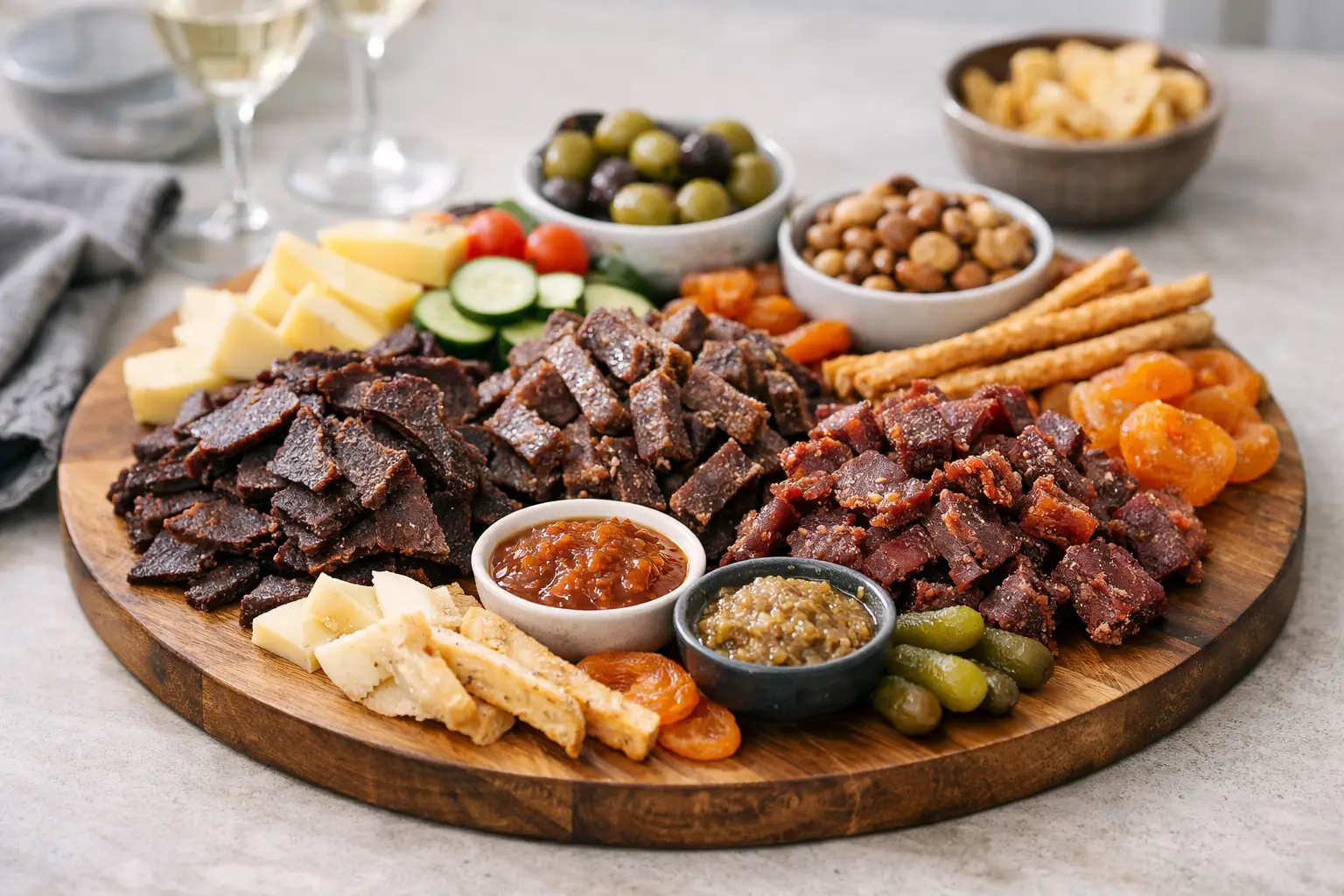
A great biltong platter disappears in layers: first the easy-to-grab droëwors, then the slices everyone reaches for, then the last salty-sweet crumbs beside the cheese. Knowing how to assemble a biltong platter is less about making it look fussy and more about putting bold South African flavour at the centre of a relaxed gathering.
Whether it is drinks on the deck, a braai with mates or a Friday night catch-up, the best board feels generous without being overcrowded. Give each item room to shine, offer a few fresh contrasts, and let the dried meat do the heavy lifting. That is proper lekkerness.
Start with the right platter size
Choose the board before buying or slicing anything. A board that is too large makes even premium biltong look sparse; one that is too small turns into a jumble where flavours and textures disappear. A timber board, large ceramic platter or flat serving tray all work well. Pick something with a slight edge if you are using olives, chutney or juicy fruit.
For four to six people having drinks and nibbles, a medium platter is usually plenty. If biltong is the main event before dinner, or you are feeding a hungrier crowd, go larger or make two boards. One can be a meat-and-cheese platter while the other carries crackers, fruit and extras. It is easier for guests to gather around two generous boards than one packed-to-the-edges centrepiece.
Do not feel tied to the traditional round grazing-board look. A long platter suits sliced biltong and folded salami-style meats beautifully, while smaller individual plates work brilliantly for a more polished dinner party. The format depends on the occasion, not a rulebook.
How to assemble a biltong platter with balance
Begin with three or four meat styles rather than loading up on a single cut. The point is contrast. Place your meats first, then build the supporting flavours around them.
A strong biltong platter usually includes sliced biltong, a few thicker pieces or chunks, and droëwors cut into short lengths or served in loose coils. Add handcrafted jerky for a different chew and seasoning profile, or cabanossi if you want a fuller, more substantial spread. At Steyn's Biltong & Jerky, mixing these South African favourites is an easy way to create a board with real variety without overcomplicating the shopping.
Keep the biltong as the visual anchor. Fan slices in a loose arc, or arrange small overlapping piles rather than one giant stack. If you have both lean and fattier biltong styles, keep them separate so guests can choose their favourite. Place droëwors in a circle or a relaxed curve. The shape adds movement to the board and makes it simple to grab a piece without disturbing everything else.
From there, work in pockets of colour and crunch. A good balance comes from pairing the savoury richness of dried meat with creamy, sharp, fresh and sweet elements. You do not need every option. Choose a few that suit your crowd and keep the platter focused.
Add cheese with a clear purpose
Two cheeses are generally enough. A firm aged cheddar or mature gouda brings a savoury bite that sits naturally beside biltong, while a creamy brie or soft goat's cheese gives the board a gentler contrast. For something with more punch, blue cheese works in small amounts, especially with fruit or chutney nearby.
Cut firm cheese into bite-sized triangles or cubes before serving. Leave soft cheese mostly whole with a small cheese knife, so it does not lose its appeal before the first guest arrives. Put cheese in separate areas of the platter, rather than burying it under crackers.
Bring in fresh, sharp and sweet flavours
Fresh grapes, pear slices, apple wedges and dried apricots are all excellent with biltong. Grapes offer an easy burst of sweetness, while crisp apple or pear cuts through the savoury depth. If you use apple or pear, add it just before serving so it stays bright and inviting.
For a sharper note, use cornichons, pickled onions, olives or a small spoonful of wholegrain mustard. A good relish, onion marmalade or tomato chutney also earns its place, but serve it in a little bowl rather than letting it run across the board. Keep these additions measured. Biltong has personality, and the platter should support it rather than drown it out.
Choose crackers that do not steal the show
Plain water crackers, crispbread and lightly salted crackers work better than heavily flavoured options. They give guests a base for cheese and meat without competing with the spices and savoury character of the biltong.
Add a sliced baguette if the platter is standing in for a light meal. For casual drinks, crackers are usually enough. Place them in a pile at one end of the board, or serve extra in a bowl alongside it. This prevents the platter from becoming all beige and gives you room to make the central ingredients look their best.
Build the platter in the right order
The quickest way to make a board look considered is to build from largest items to smallest. Put down any bowls first: chutney, mustard, olives or pickles. Then position the cheese, followed by the biltong, droëwors, jerky and cabanossi. Once those bigger shapes are in place, fill the open areas with fruit, nuts and crackers.
Use small clusters instead of a perfectly symmetrical layout. Three grapes here, a nest of droëwors there, a handful of almonds beside the cheddar. That relaxed abundance is far more inviting than rows of ingredients lined up like a supermarket shelf.
Leave a little breathing room between wet and dry ingredients. Crackers beside chutney will soften quickly, and biltong does not need to sit against juicy fruit. Think about how people will actually eat from the platter, not just how it looks in a photo.
If you are using nuts, roasted almonds, cashews or macadamias are especially good. Scatter them only at the end, after the main components are arranged. They are the finishing detail, not the foundation.
Portion enough without going overboard
For drinks before a meal, allow around 50 to 75 grams of dried meat per person, depending on what else you are serving. If the platter is the main food at a casual get-together, increase that amount and make sure there are ample crackers, cheese and fruit alongside it.
It also depends on the crowd. A nostalgic South African gathering may go straight for the droëwors and biltong, while guests new to the flavours might enjoy more cheese, fruit and crackers as an introduction. There is no need to make every board identical. Build it for the people coming through your door.
A useful hosting trick is to hold back a small portion of the biltong and crackers. Refill the board once it starts looking picked over instead of piling everything on at the beginning. The platter stays fresh-looking, and you can keep the best bits coming without crowding the table.
Make it look good without making it precious
Serve biltong at its best texture, not straight from a cold fridge. Take the meats out shortly before guests arrive and keep the platter away from direct sun if you are entertaining outdoors. Add delicate fruit last, and have napkins nearby because the best platters are always hands-on.
Skip elaborate garnishes that nobody will eat. A few rosemary sprigs can look smart, but they are optional. Colour should come mainly from food: deep biltong, golden crackers, green grapes, pale cheese and bright pickles. That is enough.
A biltong platter does not need restaurant-level styling to impress. It needs good meat, generous placement and a few well-chosen contrasts. Put it on the table while the conversation is still warming up, and give your guests every excuse to linger for one more piece.