How to Slice Biltong for Better Texture at Home
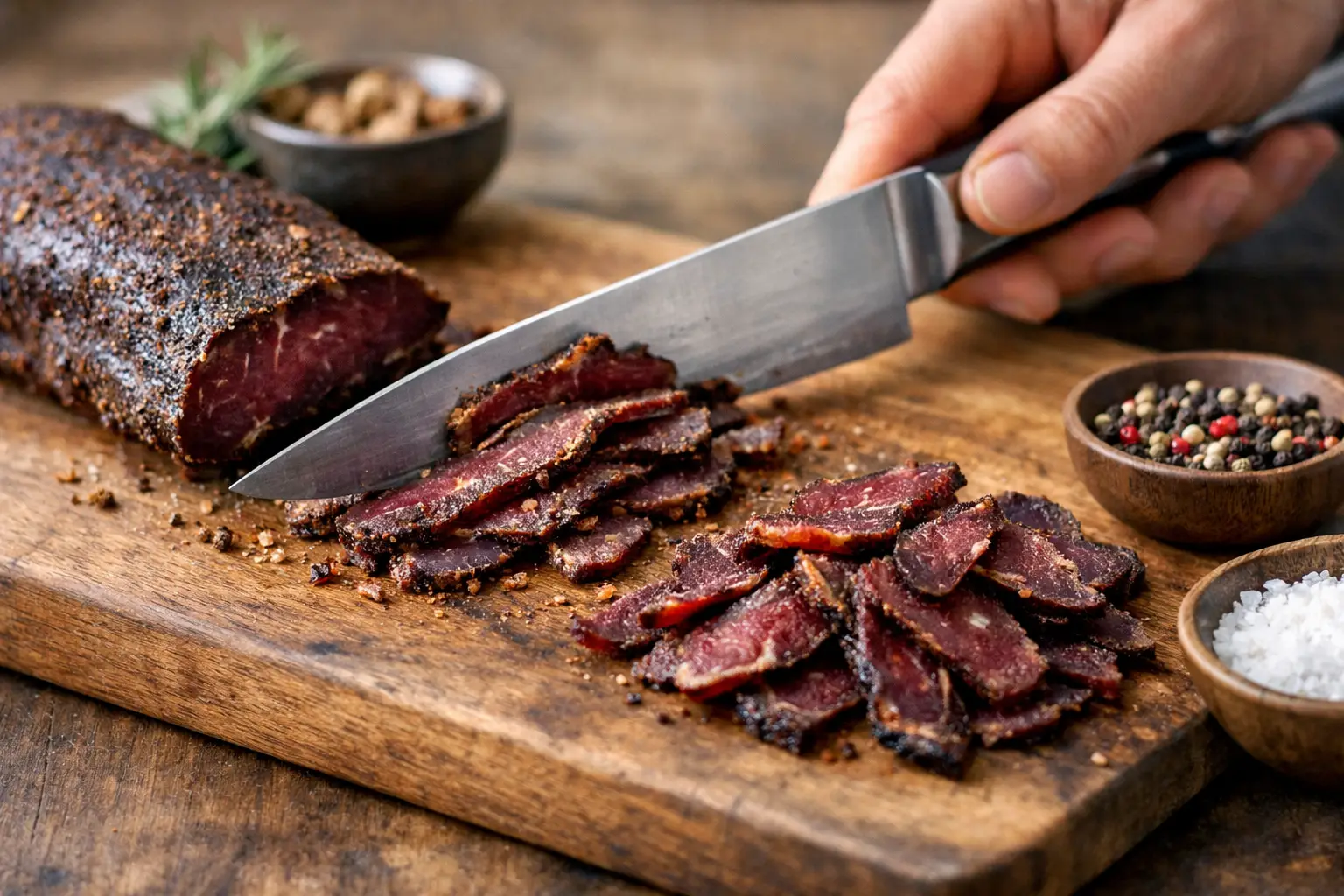
A proper piece of biltong deserves better than a hacked-off chunk with ragged edges. Knowing how to slice biltong gives you tender, even slices that show off the spice, the rich beef flavour and that unmistakable South African lekkerness. It also makes a real difference to how it eats - especially when you have chosen a premium, whole piece with a beautiful fat cap.
The good news is that you do not need chef-level knife skills or fancy equipment. You need a sharp blade, a stable board and a quick look at the direction of the meat fibres before you make the first cut.
How to Slice Biltong the Right Way
Place the biltong flat on a clean chopping board and look closely at the meat. You will see long lines running through it. Those lines are the grain - the direction of the muscle fibres. For the most tender bite, slice across the grain, not along it.
Cutting across the grain shortens those fibres. That means less chewing and a softer, more satisfying texture, even with a drier piece of biltong. If you slice with the grain, the strips can feel stringier and firmer. Some lifelong biltong fans genuinely prefer that extra chew, particularly with thick-cut pieces, so this is not a hard rule. It comes down to the texture you enjoy.
Hold the biltong securely with your non-cutting hand, keeping your fingertips tucked back. Use smooth, deliberate strokes rather than pressing and sawing. Let the knife do the work. If the blade is sharp, each slice should come away cleanly without pulling the meat apart.
For most people, cutting at a slight angle across the grain is the sweet spot. It creates a broader slice, gives the biltong a premium deli-style look and makes a firm piece easier to chew.
Start With the Right Knife
A sharp, non-serrated knife is the best tool for slicing biltong by hand. A carving knife, chef’s knife or long slicing knife all work well, provided the blade has a fine edge. The longer blade helps you make a single, clean pull through the meat instead of a series of short cuts.
Avoid a blunt knife. Blunt blades compress the biltong before cutting it, which can squeeze the fat, tear the outer seasoning and leave uneven pieces behind. A serrated bread knife may seem useful on a dry piece, but it tends to shred rather than slice, particularly when the biltong is moist in the centre.
If biltong is a regular fixture in your pantry, a dedicated biltong slicer is a worthy bit of kit. Traditional guillotine-style slicers are made to produce thin, consistent slices with a firm downward action. They are particularly handy when serving biltong to a crowd, filling a snack board or preparing a generous bowl for game day.
Whatever tool you use, make sure the board does not slide around. Put a damp cloth beneath it if needed. It is a small step, but it keeps the slicing steady and safer.
A note on electric slicers
An electric meat slicer can produce very fine, uniform biltong, but it is not essential for most homes. It also needs careful cleaning, especially around the blade and guards. For a single piece or a quick arvo snack, a sharp knife is simpler and gives you more control over each slice.
Choose Your Thickness Before You Cut
There is no single correct thickness for biltong. That is part of the joy of it. Thin slices suit people who want a tender, melt-in-the-mouth snack, while thicker cuts bring more chew and a heartier bite.
For thin biltong, aim for slices around 1 to 2 mm. These work brilliantly on a grazing platter, alongside cheese, crackers and pickles, or folded into a lunchbox. Thin slices also make a strong first impression for anyone trying biltong instead of ordinary jerky.
Medium slices, around 3 to 4 mm, are the everyday favourite. They hold their shape, carry the spice well and give you enough bite to enjoy the meat’s texture without working too hard for it. If you are unsure where to start, this is the reliable middle ground.
Thick slices are for those who like their biltong proudly substantial. Cut them about 5 mm or more for a satisfying snack on the road, after training or with a cold drink. Just remember that thick pieces should still be cut across the grain if tenderness is the priority.
The fat cap matters here too. Creamy, seasoned fat is a treasured part of traditional biltong, and a thin or medium slice lets it soften pleasantly as you eat. Very thick slices with a large fat layer can feel rich for some people. If that is not your style, trim a little fat from the edge before slicing, rather than removing it all. You lose some of the character when every bit of fat disappears.
Should You Slice Biltong Cold or at Room Temperature?
A slightly chilled piece of biltong is usually easier to slice neatly, particularly if it is moist, fatty or very tender in the middle. The cooler temperature firms the fat and meat just enough for cleaner cuts. If your piece feels soft under the knife, place it in the fridge for 15 to 20 minutes, then try again.
That said, biltong tastes its most aromatic when it is not fridge-cold. The coriander, pepper and vinegar notes come through more clearly as it warms. A practical approach is to chill it briefly for slicing, then let the slices sit for a few minutes before serving.
Follow the storage guidance on your pack, especially once it has been opened. Keep the product away from heat and humidity, and use clean, dry hands or tongs when reaching for more. Moisture is the enemy of good dried meat texture.
Slice Only What You Plan to Eat
Whole biltong stays in better condition when it remains whole. Every fresh cut exposes more surface area to air, which can gradually dry the piece out. Slice what you are serving now, then store the remaining piece as directed on the packaging.
This is especially useful if your household likes different textures. One person can have wafer-thin pieces for a platter, while another gets thick, chewy slabs straight from the board. A single quality piece can go a surprisingly long way when it is sliced with intention.
If you have already sliced more than you need, avoid leaving it uncovered on the bench for hours. Pack it away promptly in a clean, dry container according to the storage instructions. It will keep its flavour and texture far better than a pile of forgotten slices beside the chopping board.
Common Biltong Slicing Mistakes
The biggest mistake is rushing. Biltong is a handcrafted product, and taking an extra minute to find the grain and steady the piece pays off in every bite. Fast, heavy cutting often creates uneven chunks that are difficult to chew and less enjoyable to share.
Another common move is slicing from a wobbly end. Start from the broadest, flattest section where possible, then work your way along. If the piece is irregularly shaped, turn it as you go to maintain a stable surface.
Finally, do not judge a piece solely by how hard the outside feels. Biltong can have a firmer outer edge and a beautifully tender, moist centre. A sharp knife and thin first slice will tell you far more than squeezing the meat through the pack.
At Steyn’s Biltong & Jerky, we reckon the best slice is the one that suits the moment: thin for sharing, thick for proper snacking, always cut cleanly and enjoyed with plenty of South African pride. Put the board out, sharpen the knife and let every slice earn its place.