Why Is Jerky Expensive? The Real Cost Explained
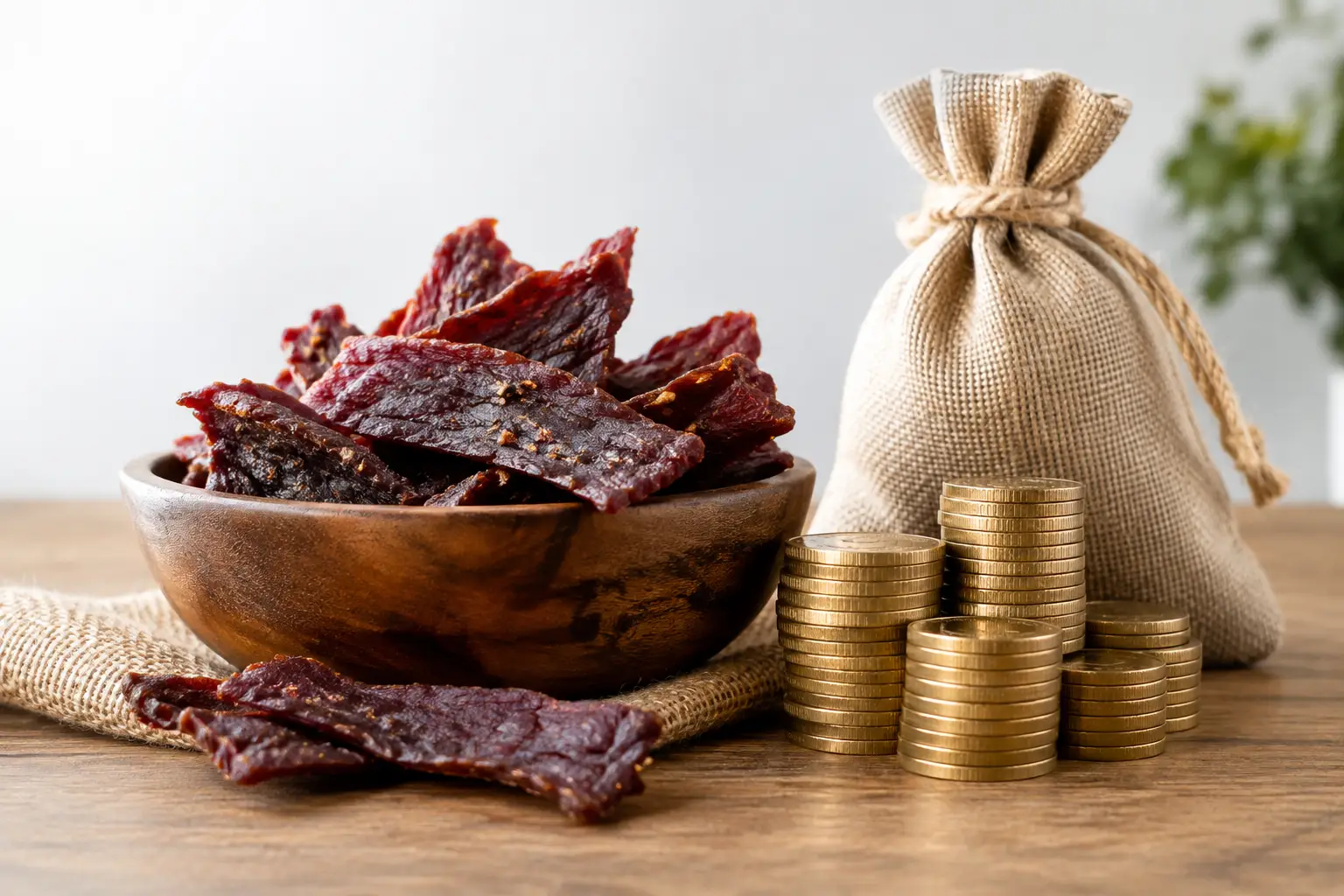
A small bag of jerky can look pricey beside a bigger packet of chips, so it is fair to ask: why is jerky expensive? The short answer is that dried meat is sold after much of its original weight has disappeared. Add quality beef, careful preparation, seasoning, skilled handling and packaging that keeps it tasting spot-on, and the price starts to make proper sense.
Premium jerky is not trying to be a cheap filler snack. It is meat first, and the finished pack reflects the care that goes into getting that meat right. That is where the real lekkerness lives.
Why is jerky expensive compared with other snacks?
The shelf-price comparison can be misleading because jerky and conventional snacks begin with very different ingredients. A large bag of crisps may contain inexpensive potatoes, oil and seasoning. A pack of jerky begins with beef, which is one of the more costly ingredients a snack maker can buy.
Then there is the concentration effect. Fresh beef contains a significant amount of water. During drying, that moisture is removed, leaving a smaller amount of finished product behind. In practical terms, a producer needs several kilograms of raw meat to create one kilogram of jerky. You are buying a compact product, but the cost of the original meat has not vanished with the moisture.
That is also why comparing two packets only by their shelf size rarely tells the whole story. A modest-looking pack of quality jerky can represent a serious amount of fresh beef, time and work.
The biggest cost: quality beef
The starting meat matters more than anything else. Better cuts cost more, but they can produce a better bite, cleaner texture and more consistent result. Producers also need to be selective. Excess fat, sinew and inconsistent pieces may need trimming or cannot make the cut for a premium batch.
Cheaper jerky can reduce costs by using lower-grade meat, more processing, extra sweeteners or heavy flavouring designed to cover inconsistencies. There is a market for every style, but it is not the same proposition as handcrafted jerky where the meat is expected to carry the flavour.
Australian beef pricing can move around too. Seasonal conditions, feed costs, processing capacity and demand all influence what meat costs before it reaches a jerky maker. When the price of good beef rises, premium dried meat cannot stay untouched forever.
Drying means less finished product
This is the part many people do not see. A tray of fresh beef may look generous before drying, then emerge as a far smaller batch of jerky. The reduction in weight is not waste in the usual sense - it is simply moisture leaving the meat - but it changes the economics completely.
Think of it like buying concentrated flavour. The finished piece is lighter and smaller than the original cut, yet it still carries the cost of the beef it began as. When a brand refuses to bulk out its product with unnecessary extras, that concentration is even more obvious.
Trimming and consistency have a cost
Not every piece of meat is identical. Thickness, grain, fat coverage and shape all vary, and those differences affect the final texture. Producing jerky with a reliably enjoyable chew requires attention before and after drying. That means sorting, trimming and checking batches rather than simply pushing volume through a factory line.
For a premium producer, consistency is part of the product. Nobody wants one piece that is beautifully tender and the next that is all hard edges and sinew. Achieving that consistency takes labour and experience, both of which belong in the price.
Small-batch care is not factory-scale cheap
Jerky made in huge industrial volumes can spread equipment, labour and purchasing costs across an enormous number of packets. A handcrafted producer does not have that same scale, and that is often deliberate.
Smaller batches allow closer attention to flavour, texture and freshness. They also make it easier to maintain a recognisable house style rather than chasing the lowest possible cost per gram. The trade-off is simple: careful production costs more than high-volume automation.
Seasoning is another example. A well-balanced recipe needs good ingredients and restraint. It is easy to make dried meat loudly salty, overly sweet or aggressively smoky. It is harder to build flavour that lets the beef remain front and centre. Traditional South African-inspired dried meats, especially, depend on that balance rather than a shortcut-heavy flavour profile.
At Steyn's Biltong & Jerky, that attention is part of the point. Handcrafted dried meat on the Sunshine Coast is made for people who notice the difference between a generic snack and a proper, flavour-forward piece of biltong or jerky.
Packaging, compliance and getting it to your door
The cost of jerky does not stop once the meat is ready. Quality packaging is there to help preserve flavour and texture, protect the product in transit and present it properly. That includes food-grade materials, sealing equipment, labels and batch information.
There are also the behind-the-scenes responsibilities of making food for customers: hygiene systems, quality checks, storage, energy, equipment maintenance and staff training. These are not glamorous parts of the business, but they are essential. A trustworthy producer builds them into every pack.
For online orders, delivery adds another layer. Australia is a big place, and sending specialty food from Queensland to customers around the country requires reliable packing and freight arrangements. Express delivery can be excellent for freshness and convenience, but it is not free for the business to provide. When a brand offers free express shipping above a certain order value, it is usually because a larger basket helps absorb that cost more sensibly.
Is expensive jerky always better?
Not automatically. A high price alone is not proof of quality. Some products are expensive because of branding, fancy packaging or retail mark-ups rather than exceptional meat. The better question is whether the product gives you clear signs that the price is earned.
Look at the meat itself. Does it have a natural, appealing texture? Is the flavour balanced, or is it trying to distract with sweetness and smoke? Does the brand speak clearly about its style and preparation? Is the pack a sensible weight for the price? These details tell you more than a premium-looking label ever will.
It also depends on what you enjoy. If you prefer soft, sweet, mass-market jerky, a traditional, meat-led product may not be your favourite even if it is beautifully made. If you care about authentic flavour, a proper chew and the character of quality beef, spending a little more can feel entirely worthwhile.
Jerky versus biltong: price follows the style
Jerky and biltong are often grouped together, but their flavours and textures can be quite different. That difference affects ingredient choices, seasoning, preparation time and the amount of trimming required. Neither style is automatically more expensive, although individual recipes and cuts can certainly change the price.
Biltong lovers often value the distinct seasoning, satisfying slices and traditional South African character. Jerky fans may lean towards its firmer texture and familiar flavour profiles. Droëwors and cabanossi bring their own craftsmanship and ingredient demands into the mix. The fairest way to judge value is within the style you actually enjoy, not by assuming every dried meat product should cost the same.
Getting better value from premium dried meat
Premium jerky is best treated as a quality snack, not an impulse bargain-bin buy. Buying larger packs or ordering enough to qualify for shipping offers can lower the per-gram and delivery cost. It also helps to choose a flavour you already know you enjoy instead of collecting half-finished packets in the pantry.
Most importantly, judge the purchase by the experience, not just the packet size. A great piece of jerky should taste like real meat with confident seasoning and proper character. When it does, the price is not just for what is in the bag. It is for the quality beef, the weight lost during drying, the skilled hands behind the batch and the tradition carried in every bite.
Next time you pick up a premium pack, look beyond the grams on the label. If it delivers honest meat, real flavour and that unmistakable touch of South African lekkerness, you are buying something made to be enjoyed, not merely eaten.