Beef Biltong vs Beef Jerky for Serious Snackers
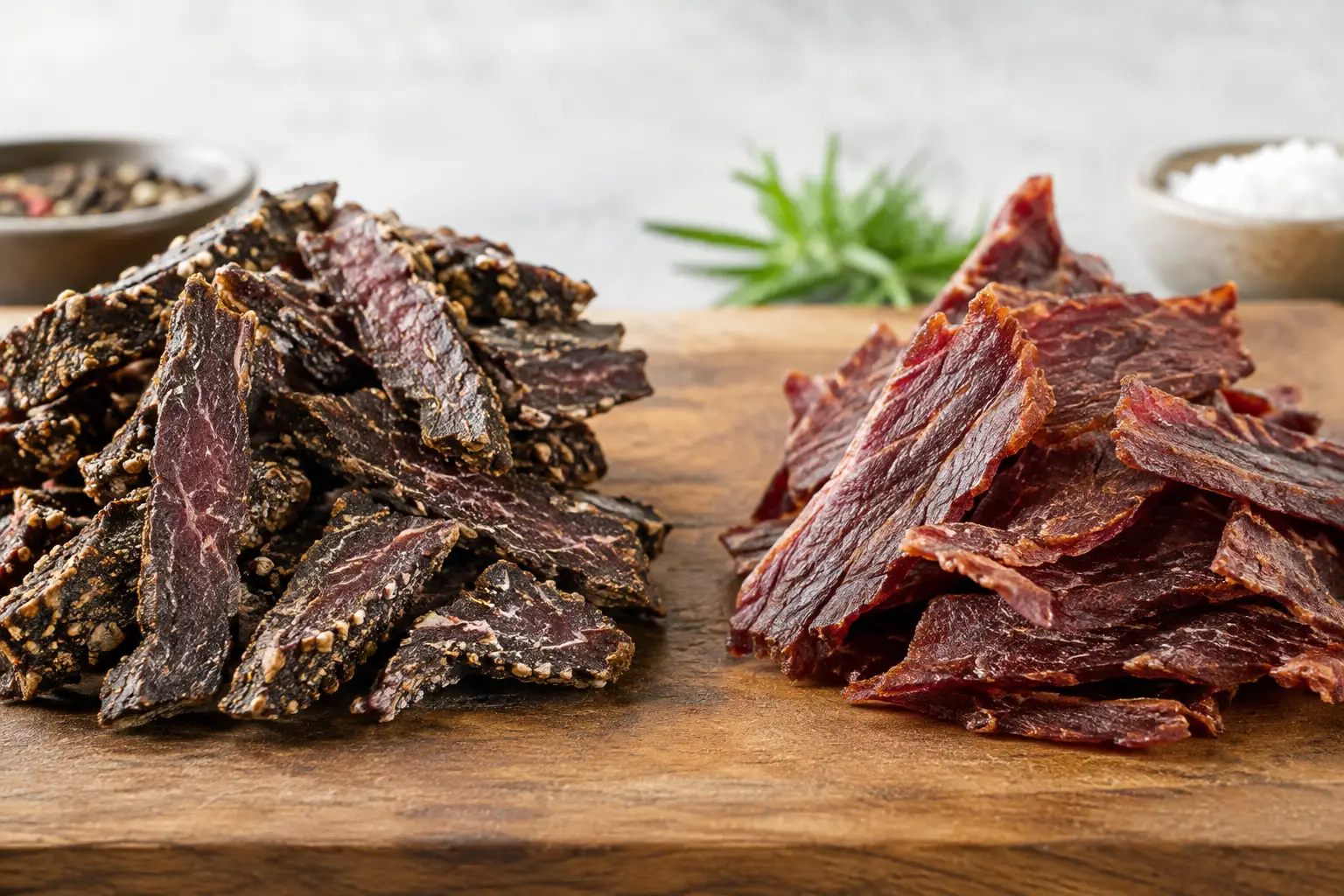
One bite usually settles the debate. Beef biltong vs beef jerky is not simply a choice between two packets of dried beef - it is a choice between two very different snacking experiences. One is known for a bold, savoury chew and South African heritage; the other is often sweeter, smokier and firmer. Both have their place, but they do not eat the same.
For anyone who has grown up with biltong in the cupboard, taken it on a road trip or missed that familiar coriander-led flavour after moving to Australia, the difference is obvious. For newer fans, it is worth knowing what you are reaching for before the first handful disappears.
Beef Biltong vs Beef Jerky: The Big Difference
The clearest difference is in character. Biltong is built around the flavour of the beef, lifted by traditional seasoning and a tangy vinegar note. Jerky often leans harder into marinade flavours such as smoky barbecue, pepper, teriyaki or chilli. That does not make one better than the other. It simply means the craving is different.
Biltong tends to feel more like a proper cut of beef that has been carefully dried. Jerky is often more uniform in shape and firmer in bite, particularly the thin strips many Australians know from service stations and supermarket shelves. If you want a snack that is punchy, chewy and often sweet or smoky, jerky delivers. If you want a fuller beef flavour with a distinctly South African edge, biltong is the natural pick.
There is plenty of variation within both camps, too. A moist, tender biltong sliced a little thicker will eat very differently from a dry, fine-cut biltong. Likewise, a premium handcrafted jerky bears little resemblance to a tough, overly sugary strip. The label matters less than the cut, seasoning and care behind it.
The Cut and the Chew
Texture is where many snackers pick a side for life. Biltong is generally cut from larger, whole-muscle pieces of beef. It can be sliced into strips, chunks or thin shavings, and its texture changes depending on how dry it is cut. Some people love a softer centre and a little give in the chew. Others want it properly dry, intensely savoury and made for slow snacking.
Jerky is usually cut thinner before drying, creating that familiar strip or ribbon shape. It can be tender, but it is more likely to have a firmer, tighter chew. The grain of the meat is often very noticeable, which is part of jerky's appeal. It is the sort of snack you can keep in the ute, the desk drawer or your travel bag and nibble at over time.
Neither texture is objectively superior. It depends on whether you enjoy a substantial bite or a more fibrous chew. If a packet of jerky has ever felt a little too stiff for your liking, biltong may be your answer. If you like working through a chewy strip with a big hit of marinade, jerky is still firmly in the running.
Seasoning Tells the Story
Traditional biltong seasoning is unmistakable. Coriander seed is the hero, supported by salt, pepper and vinegar. The result is aromatic, savoury and gently tangy rather than sauce-heavy. Good biltong does not hide the beef. It lets the spice sit alongside it.
Jerky seasoning takes a broader route. Many jerky styles rely on marinades that bring sweetness, saltiness, smoke or heat. There is room for every flavour under the sun, from sticky barbecue through to cracked pepper and chilli. That range makes jerky a reliable crowd-pleaser, especially when people have different tastes around the table.
The trade-off is straightforward. Jerky can offer bigger, more immediate flavour variety. Biltong offers a more recognisable traditional profile, where the quality of the meat and balance of the spice matter enormously. When the coriander is fragrant, the vinegar is measured and the beef is treated with respect, it is proper lekkerness.
Fat is part of the biltong conversation
A traditional biltong cut may include a fine layer of fat, and that is no accident. For many South Africans, that rich edge is part of the experience. It adds flavour and gives each slice a distinct character. Lean biltong is available for people who prefer a cleaner bite, but a little fat is often where the nostalgia lives.
Jerky is commonly made from leaner cuts, partly because a thin strip needs to dry consistently and keep its familiar texture. Again, this is preference rather than a rule. Choose biltong when you enjoy a richer, more varied mouthfeel; choose jerky when you want a leaner, more uniform strip.
Tradition Matters More Than the Packet Says
Biltong is a fixture of South African food culture. It belongs at braais, on long drives, during sport, at family gatherings and in those quiet moments when someone opens a bag and suddenly everyone wants some. Its flavour carries memory as much as seasoning.
That cultural connection is why authenticity matters. Biltong made with traditional methods and confidently balanced spices gives South African expats a taste of home, while giving Australian snackers something far more interesting than the usual shelf options. It is familiar to one person and a brilliant discovery for another.
Jerky has its own proud history and broad appeal, particularly as a convenient grab-and-go snack. It is easy to recognise, easy to share and available in countless flavour styles. But it does not try to be biltong, and biltong should not try to be jerky. The best versions of each stay true to their own strengths.
When Biltong Is the Better Choice
Reach for biltong when you want the beef to lead, not disappear behind a sticky glaze. It suits people who enjoy savoury spice, a choice of wet or dry texture, and slices with a little more presence. It is also a cracking option for a grazing board, alongside cheese and crackers, or for putting out before a weekend braai.
Biltong is especially worth choosing when freshness and small-batch attention matter to you. A locally crafted product can deliver the traditional profile without sacrificing the convenience of ordering from anywhere in Australia. That balance is central to the appeal of premium South African-style biltong.
At Steyn's Biltong & Jerky, the focus is on handcrafted dried meats made on the Sunshine Coast with the bold, familiar flavour South Africans expect. For those who know their biltong, that heritage is not a marketing extra. It is the point.
When Jerky Is the Better Choice
Choose jerky when you are after a classic strip snack with a pronounced marinade flavour. It works brilliantly for the road, camping trips, work breaks and anyone who prefers a firmer chew. If smoky, spicy or slightly sweet notes are what you are craving, jerky gives you more room to play.
Jerky can also be the easier starting point for someone who has never tried dried meat beyond the supermarket range. Its familiar format feels low-risk. Once they are comfortable with that style, biltong is often the next delicious step.
Do You Actually Need to Pick One?
Not really. The best snack drawer has room for both. Keep jerky for when you want bold marinade and a firmer chew. Keep biltong for when only that coriander, vinegar and beef combination will do. They are different moods, not opposing teams.
If you are buying for a mixed household, start with one of each and let the empty packet decide. The person who reaches for tender, savoury slices has found their biltong favourite. The person after smoky strips has their jerky sorted. Either way, make room for the good stuff and enjoy every last bite.