Guide to Jerky Ingredient Labels for Aussies
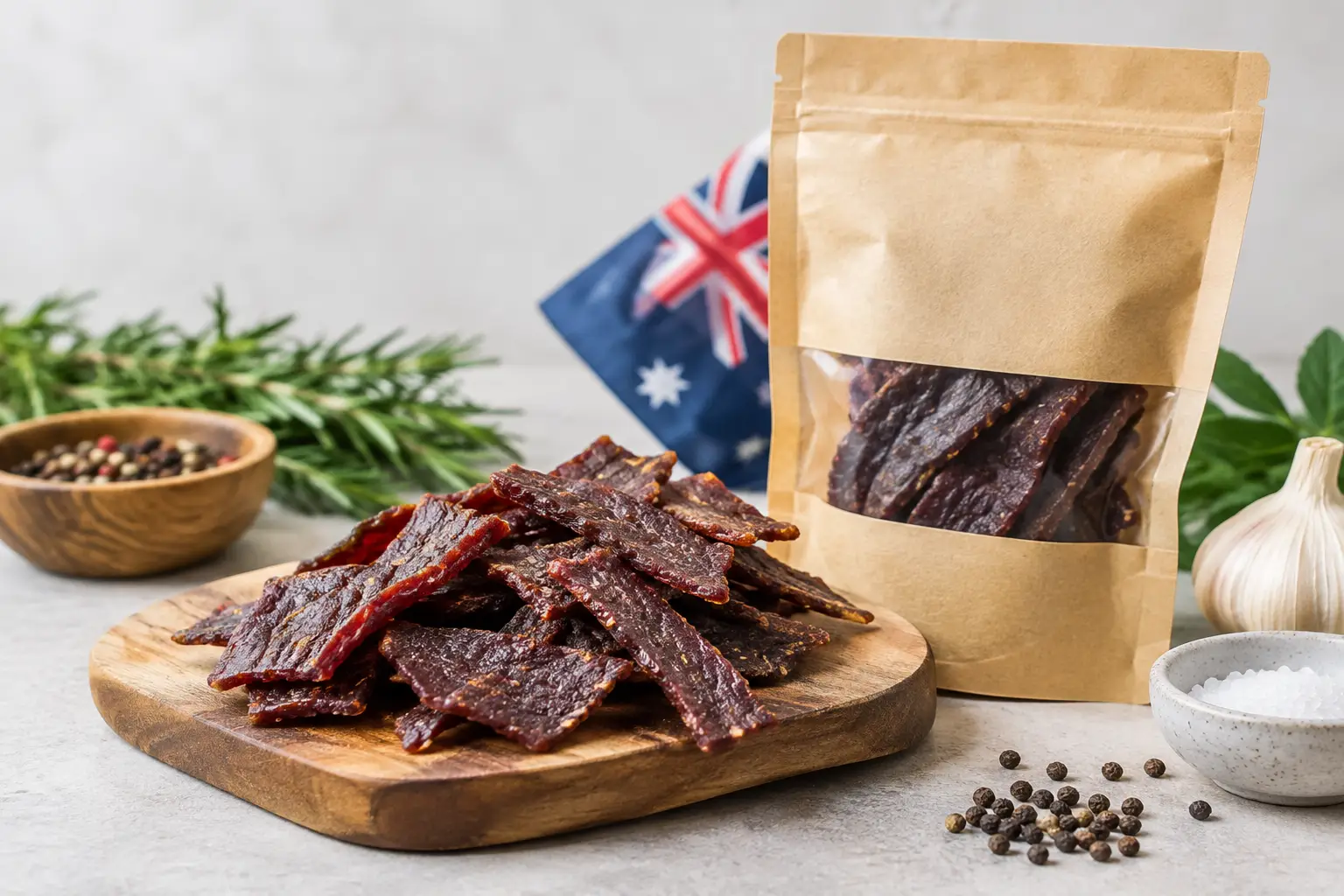
The first ingredient on a jerky pack tells a bigger story than the front-of-pack flavour name ever can. Whether you are grabbing a smoky snack for the road, stocking the pantry, or chasing a proper taste of home, this guide to jerky ingredient labels helps you read past the bold claims and get to the good stuff: the meat, the seasoning and the choices behind the flavour.
A short ingredient list is not automatically better, and a longer one is not automatically a deal-breaker. The point is to know what you are looking at. Premium jerky should feel like a considered meat snack, not a guessing game.
Start with the first ingredient on the jerky label
Ingredients are generally listed in descending order by weight at the time they are added. That makes the first few entries the most useful place to begin. For jerky, you want the meat to take centre stage.
Look for a clearly named meat, such as beef, rather than vague wording that leaves you wondering what is in the bag. Specificity matters. It shows the producer is prepared to tell you exactly what forms the foundation of the product.
Remember that drying changes the finished weight dramatically. A packet of jerky may be light in the hand, but it began with considerably more fresh meat. That is why an ingredient panel should be read as a recipe record, not as a simple snapshot of the final product’s proportions.
After the meat, you will usually see the ingredients that build the personality of the jerky: salt, spices, pepper, garlic, chilli, vinegar, smoke flavouring, soy sauce, Worcestershire sauce or other marinades. There is room for plenty of character here. A peppery strip and a sweet chilli jerky should not read the same on paper, and that is part of the fun.
Read seasonings as a flavour map
A useful guide to jerky ingredient labels is to treat the middle of the panel like a flavour map. The ingredients reveal whether the product is aiming for clean pepper-and-salt simplicity, a savoury marinade, a sticky barbecue profile, or a proper chilli hit.
If black pepper appears high on the list, expect it to make itself known. If garlic, onion, coriander or paprika are included, they will likely add depth rather than just heat. Vinegar can bring tang, while soy-based ingredients often add savoury richness. Smoke flavouring may be used for a campfire-style note, though it is different from a naturally smoked product.
The wording matters here. “Spices” is a legitimate label term, but a named spice list gives you a clearer picture of the flavour. Neither approach tells you whether you will love it - your own taste buds have the final say - but detail is always handy when you are choosing between flavours online.
South African-style dried meats are often built around confident, familiar seasoning rather than trying to hide the meat beneath a loud sauce. That is the appeal of a well-balanced traditional profile: the spice supports the meat, instead of nicking the whole show.
Watch for compound ingredients
Some ingredients bring their own ingredient list with them. Soy sauce, Worcestershire sauce, spice blends and marinades can all be compound ingredients. That is why you might see brackets after an ingredient, listing components such as water, salt, sugar, wheat, soy or spices.
This is not label clutter for the sake of it. It is useful context. A product may appear to have a simple marinade at first glance, but the bracketed detail tells you how that marinade gets its flavour.
If you prefer a straightforward peppery jerky, a label with beef, salt, vinegar and spices may suit the occasion. If you are after glossy, sweet-and-smoky strips, a more involved marinade can be exactly the point. There is no universal winner - only the flavour and style you feel like eating.
Sugar, sweetness and the order of ingredients
Sugar can appear in jerky under several names, including sugar, brown sugar, honey, glucose, maltodextrin or syrup. Seeing one of these does not tell you the entire story on its own. What matters is where it sits in the ingredient list and what role it appears to play.
In some flavours, a little sweetness rounds out salt, chilli or smoke. In others, it is central to the profile. If a sweet barbecue-style jerky tastes like sweet barbecue, that is not a surprise - the label has usually signposted it.
The same common-sense approach applies to salt. Salt is a familiar part of cured and dried meat flavour, and it may appear alongside ingredients such as soy sauce, seasoning blends or curing agents. Compare like with like. It makes more sense to compare two original-style jerkies than an original jerky with a sticky teriyaki-inspired flavour.
Preservatives and curing ingredients: read, do not panic
Jerky labels can include ingredients such as preservative, antioxidant, acidity regulator or curing agent, often followed by a number. These terms can sound more dramatic than they are. Their presence tells you that the producer is declaring what has been used, as required on the label.
The practical question is not whether a word looks technical. It is whether the label is clear, the flavour appeals to you, and the product comes from a producer whose standards you trust. Different recipes use different approaches, and dried meat products are not all trying to achieve the same texture, colour or shelf presentation.
Do not assume that “natural” means one recipe is automatically superior, either. It is a broad marketing word unless the ingredient panel gives it useful detail. The back of the pack is where the real conversation happens.
Allergens deserve a separate look
Ingredients such as soy, wheat, milk, sesame or sulphites may be declared within the ingredient list or in a separate allergen statement. If you need to avoid a particular ingredient, read both areas carefully each time you buy. Recipes and suppliers can change, even when a product name looks familiar.
This is especially relevant with marinades and seasoning mixes, where soy sauce, malt vinegar or Worcestershire-style ingredients may introduce components that are not obvious from the flavour name alone. “Cracked pepper” sounds simple; the full panel tells the full story.
Don’t confuse front-of-pack language with the ingredient panel
Words like premium, artisan, handcrafted and traditional can point to genuine care, but they are not a substitute for reading the label. The strongest products back up their front-of-pack promise with clear ingredients and a flavour profile that makes sense.
For example, a premium jerky can have a thoughtfully layered ingredient list if that is what creates its signature marinade. Equally, a traditional-style product can keep things beautifully pared back. Quality is not measured by counting ingredients alone. It is found in the balance between good meat, purposeful seasoning and honest labelling.
At Steyn’s Biltong & Jerky, that balance is part of the lekkerness. Handcrafted dried meats should give you a clear sense of what you are choosing, whether you are after familiar South African flavour or a bold new jerky favourite.
A quick label check before you add to cart
When you are comparing packets, take ten seconds to check four things:
- The first ingredient is a clearly identified meat.
- The seasoning matches the flavour experience you want.
- Sweeteners and marinades appear where you would expect them to.
- Any ingredients you personally need to avoid are clearly accounted for.
That is enough to make a smarter choice without turning snack time into a spreadsheet. You do not need to memorise every additive number or decode every spice blend. You simply need to know that the label is there to be read - and that a good jerky should earn your confidence before you tear open the bag.
Next time you are choosing between original, chilli, pepper or smoky barbecue, let the ingredient panel have its say. Then pick the flavour that sounds properly lekker and enjoy every strip.